
The Toronto Mayoral Race: Where the Frontrunners Stand on the City's Biggest Issues
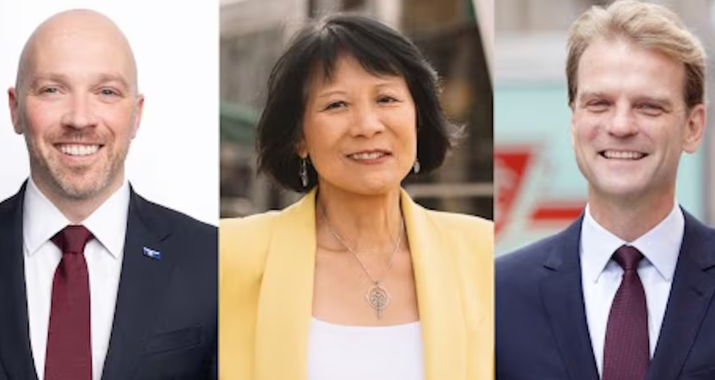

TORONTO — As Toronto prepares for the municipal election on October 26, 2026, the race for the mayor's chair has officially entered its final, high-stakes stretch. Incumbent Mayor Olivia Chow faces a formidable challenge from her primary conservative and centre-right opponents, City Councillor Brad Bradford and former federal immigration minister Chris Alexander.
With Canada's largest metropolis grappling with a staggering municipal budget deficit, an unprecedented housing and rental affordability crisis, chronic traffic gridlock, and growing public anxiety over community safety, the frontrunners have put forward distinctly different blueprints for the future of the city. While recent polling from Mainstreet Research continues to show Chow maintaining a narrow lead, her challengers are ramping up their policy platforms, banking on voter frustration with the rising cost of living to close the gap.
1. Taxes and Fiscal Responsibility
The debate over how to finance Toronto’s massive capital requirements highlights a fundamental ideological split. The candidates are divided over whether to introduce progressive revenue tools, enact immediate tax freezes, or radically restructure city services to uncover internal efficiencies.
- Olivia Chow: Olivia Chow’s platform emphasizes a balanced, progressive approach to city management, advocating for predictable revenues to preserve essential public services. She has aggressively defended her fiscal record, pointing to stabilised transit operations and expanded social programming achieved without bankrupting the city. Chow has levelled sharp criticism against her opponents' fiscal blueprints, characterising their aggressive cost-cutting and debt-restructuring proposals as "reckless". She argues that plans to defer capital debt or freeze revenues rely heavily on financial engineering, which would ultimately mask deep, hidden cuts to vital municipal programmes and infrastructure maintenance down the line.
- Brad Bradford: Brad Bradford has centred his campaign on structural financial modernisation and taxpayer relief, aiming to shield residents from the immediate effects of an affordability crisis. He is promising an immediate one-year property tax freeze and has pledged to keep all future property tax increases strictly below the rate of inflation. To offset the revenue freeze and fund long-term infrastructure, Bradford plans a line-by-line review of City Hall spending to eliminate bureaucratic redundancies. His most radical fiscal proposal involves spinning off municipal water and wastewater services into an independent, publicly owned utility corporation. Bradford argues this model will remove massive capital liabilities from the city’s primary operating budget while introducing corporate efficiencies to utility management.
- Chris Alexander: Chris Alexander is matching the call for an immediate property tax freeze, positioning his campaign as a bulwark for working-class families and homeowners squeezed by inflation. His fiscal platform aligns with traditional centre-right values of spending constraint and small-government efficiency. Alexander rejects the notion that the city requires new taxation tools to solve its fiscal problems. Instead, he vows to route existing city revenues more effectively into core capital needs, halting what he describes as discretionary, non-essential municipal spending and refocusing City Hall's resources strictly on basic infrastructure, public safety, and core services.
2. Public Transit and Daily Affordability
Rebuilding trust in the Toronto Transit Commission (TTC) and lowering daily living costs for commuters are massive focal points across all three major campaigns. A full policy comparison can be explored on the CBC Toronto Mayoral Platforms Feature.
| Candidate | Proposed Transit & Affordability Strategy |
|---|---|
| Olivia Chow | Freezing TTC fares for a fourth consecutive year. Introducing a weekly fare cap that grants free transit after 10 paid weekly rides. Expanding library-based community pass programmes. |
| Brad Bradford | Spinning off Toronto Water into a public agency, aiming to directly cut the average resident's water utility bill by 25% (roughly $300 a year). Restructuring TTC security infrastructure. |
| Chris Alexander | Refocusing municipal leverage to pressure senior levels of government into raising critical social assistance and disability benefit payouts. Fast-tracking regional transit line integration. |
- Olivia Chow: Chow’s transit strategy focuses on direct fare relief and boosting ridership through economic incentives. By freezing TTC fares for a fourth consecutive year, she aims to provide immediate financial predictability for low-income and daily transit users. Her signature transit policy is a weekly fare cap system, which ensures that once a rider logs 10 trips in a single week via Presto, all subsequent rides during that period are entirely free. Additionally, Chow plans to expand funding for municipal library programmes that distribute free passes to local museums and cultural attractions, directly lowering the cost of recreational living for families.
- Brad Bradford: Bradford’s affordability platform targets structural, systemic costs rather than individual transit fares. He asserts that spinning off Toronto Water into an independent public agency will unlock immense operational savings, which his campaign promises to pass directly back to consumers in the form of a 25% reduction in annual water utility bills—saving the average household approximately $300 per year. In terms of transit, Bradford focuses on operational reliability and security, arguing that a clean, safe, and on-time transit system is the most effective way to provide value to Toronto commuters.
- Chris Alexander: Alexander approaches affordability through intergovernmental advocacy and targeted provincial-federal coordination. Rather than introducing localised municipal subsidies or cutting targeted city rates, he vows to leverage Toronto’s immense political influence to pressure the federal and provincial governments into raising critical social assistance and disability benefit payouts. Alexander argues that the root causes of urban poverty and unaffordability cannot be solved by City Hall alone, and that the city must force upper-tier governments to fulfil their social safety net obligations.
3. Public Safety and Community Security
While city data indicates statistical improvements in specific crime categories over the last year, candidates are responding aggressively to the public perception of vulnerability in day-to-day life, particularly within the public transit network and downtown core.
- Olivia Chow: Olivia Chow defends her administration’s track record on public safety by highlighting that Toronto achieved its lowest murder rate in 50 years under her tenure. She advocates for a balanced community-safety model that combines traditional law enforcement with robust social preventative measures. Her platform supports the continued hiring of police officers and paramedics to improve emergency response times, but heavily pairs this with expanded funding for youth employment initiatives, community centres, and non-police crisis-response networks to address the root socioeconomic causes of crime.
- Brad Bradford: Brad Bradford leans heavily into public concerns regarding safety inside the transit network, community centres, and public parks. He favours a strict security-first approach, promising to legally or structurally separate capital funding to ensure the police and fire operating budgets remain fully insulated from municipal cost-cutting reviews. Bradford has pledged to increase the visible presence of security personnel and special constables across the TTC network, arguing that restoring public order and confidence in the safety of transit infrastructure is paramount to the city's economic recovery.
- Chris Alexander: Chris Alexander focuses his community safety platform on combating hate crimes and securing public spaces. He has pledged to establish a specialised, dedicated team at City Hall tasked exclusively with tracking, fighting, and preventing hate crimes across Toronto's diverse neighbourhoods. Alexander's platform also prioritises improving the accessibility of crime reporting through digital updates and establishing formal, coordinated safety protocols with local university and college leaders to protect student safety on and around urban campuses.
4. Homelessness, Mental Health, and Encampments
The debate over how to handle chronic homelessness and public park encampments highlights a deep divide between continuing long-term social support pipelines and executing rapid, mandatory transitions to permanent structures.
- Olivia Chow: Olivia Chow points to data indicating a drop in Toronto's overall homelessness rate over the last four years, citing her administration's success in transitioning 15,000 unhoused individuals from temporary shelters and park encampments into permanent housing. Her campaign focuses on continuing this supportive pipeline by expanding emergency shelter capacity, increasing funding for drop-in centres, and fortifying existing partnerships with non-profit housing providers and community healthcare agencies to deliver wraparound mental health supports.
- Chris Alexander: Chris Alexander has levelled sharp criticism against the incumbent's housing speed, arguing that the city has consistently lagged behind its housing creation targets. He has put forward a targeted plan to build affordable rent-geared-to-income homes. Alexander is also promising to dismantle the city's largest homeless encampments by 2027 through a comprehensive blueprint titled "A New Way Home for Toronto's Unhoused". Rather than relying on traditional shelter systems, his plan involves a centralised City Hall lead to coordinate fragmented outreach services and place encampment residents directly into permanent structures acquired by the city through the strategic purchase of distressed condo and rental properties.
- Brad Bradford: Brad Bradford approaches the homelessness crisis primarily through the lens of public safety and public health integration. His platform focuses heavily on building out strict recovery infrastructure, arguing that housing alone cannot solve chronic homelessness without addressing severe substance dependency and mental health trauma. Bradford has promised to fund and construct at least 100 dedicated recovery-house beds across Toronto and actively advocates for structured addiction treatment programmes for individuals dealing with severe dependencies in public spaces.
5. Gridlock, Commuting, and Traffic Management
With traffic congestion severely impacting Toronto's economic productivity and daily quality of life, the candidates are clashing over physical lane infrastructure versus macro transit expansion.
- Olivia Chow: Olivia Chow champions massive, completed rapid transit investments as the primary mechanism to pull drivers off the road and permanently ease congestion. Her platform heavily leverages completed rapid transit lines and busways, estimating that on-time delivery will move thousands of riders weekly and save commuters valuable travel time. Beyond mass transit, Chow's transportation strategy focuses city operations on better managing daily traffic flow through smart signal technology and implementing reactive, localised flood-protection infrastructure on major thoroughfares like the Don Valley Parkway to prevent weather-related gridlock.
- Brad Bradford: Brad Bradford takes direct aim at current construction bottlenecks, city-enforced lane reallocations, and bureaucratic delays, promising aggressive "anti-gridlock" construction management. His platform highlights cutting red tape for street-level utility projects, implementing strict financial penalties for construction companies that exceed project timelines on major arterials, and launching an immediate review of major arterial bike lanes and construction zones to prioritise vehicle flow and reduce idling times across the Greater Toronto Area.
- Chris Alexander: Chris Alexander echoes the call for aggressive construction oversight, promising a zero-tolerance policy for uncoordinated road closures that paralyze the downtown core. His platform focuses on modernising Toronto’s traffic management centre to enable real-time adjustments to traffic signal timing during peak hours. Alexander also vows to halt any new transit or bike lane projects that result in the net loss of vehicular lanes on critical east-west arterial roads, arguing that the city must balance multi-modal transit expansion against the baseline economic necessity of vehicle movement.
6. The High Cost of Renting and Housing Supply
With skyrocketing rental rates causing severe financial strain for low- and middle-income families, the frontrunners offer fundamentally different philosophies on market intervention, developer incentives, and public building projects.
- Olivia Chow: Olivia Chow’s rental affordability strategy focuses on aggressive tenant protections and leveraging senior-level funding pipelines to build public housing. Her housing architecture seeks to actively utilise financing through the CMHC Apartment Construction Loan Programme to deliver thousands of new affordable units. Chow's plan cuts municipal development charges significantly for eligible affordable builds. She has also vowed to pass strict municipal regulations to kerb arbitrary evictions and prevent corporate landlords from exploiting vulnerable tenants.
- Chris Alexander: Chris Alexander proposes an ambitious construction target to ease supply pressures entirely through rapid development, promising to build 10,000 affordable and rent-geared-to-income homes annually. His plan seeks to bypass traditional municipal delays by utilising underutilised city-owned land, collaborating with upper-tier governments, and bypassing traditional committee bottlenecks for 100% affordable projects. To incentivize builders, Alexander guarantees a fast-tracked, mandatory 30-day approval window at City Hall for qualifying projects.
- Brad Bradford: Brad Bradford focuses on introducing indirect financial relief to the broader housing market by wiping out the municipal land transfer tax on the first $1.1 million of a principal home purchase. His campaign argues that reducing these heavy transaction tax burdens will stimulate overall housing mobility across the city, encouraging long-time homeowners to downsize. Bradford asserts that this increased market fluidity will naturally open up a significant wave of secondary rental supply, bringing rental prices down through organic market competition rather than government mandates.
7. Major Public Criticisms and Political Vulnerabilities
As the frontrunners dominate the media narrative, each campaign has faced intense public scrutiny, policy pushback, and sharp criticism from grassroots organisations and political opponents alike.
- Olivia Chow: Critics from both the centre-right and progressive factions argue that despite her high profile, her reliance on intergovernmental deals with the provincial government has forced unnecessary policy concessions. Opponents like Bradford point out that her tenure has overseen significant property tax pressures, while critics from the left accuse her administration of moving too slowly on tangible municipal grocery projects and renter safety boards.
- Brad Bradford: Bradford has faced heavy criticism for political inconsistency. Opponents argue that while he now campaigns on freezing taxes and removing bike lanes, his voting record as a long-time city councillor reveals he previously supported many of the infrastructure and spending decisions he currently lambastes. His sweeping plan to spin off Toronto Water has also drawn skepticism from public service unions worried about long-term privatisation.
- Chris Alexander: Alexander’s platform is frequently targeted by political analysts for lacking granular municipal feasibility. Critics claim his housing fast-track targets are unrealistic under current building material constraints, and his focus on broad federal-provincial advocacy is often dismissed by opponents as an attempt to run a federal campaign at a municipal level.
Perspectives from the Wider Field
The concentration of media attention on the top three candidates has sparked fierce pushback from lesser-known candidates fighting for space on the ballot. According to the City of Toronto Candidate Registry, over 50 candidates are contesting the mayoral seat, many of whom argue that the frontrunners are ignoring systemic community issues.
Prominent independent candidate Sarah McVie has publicly targeted the frontrunners' handling of local communities, stating:
"The major campaigns are entirely focused on downtown gridlock and high-finance corporate utility spinoffs, leaving outer-ward families completely out of the conversation. True affordability starts with community-led infrastructure, not top-heavy economic deals."
Echoing the frustration over political gatekeeping, independent candidate Logan Choy added:
"Torontonians are tired of a three-way debate that reads like an elite policy echo chamber. While the frontrunners trade barbs over multi-billion dollar debt restructuring plans, real people are priced out of their neighbourhoods today because the city refuses to freeze commercial tenant evictions."
Conclusion: Two Weeks to Decide
As Toronto voters prepare to head to the polls on October 26, the contrast between the frontrunners could not be sharper. Registered voters can find their specific polling locations, review advance voting options, and print digital voter information cards via the official City of Toronto MyVote Portal.
Olivia Chow is asking the city for a mandate to continue her progressive, investment-forward vision, relying on historic intergovernmental funding deals and enhanced social infrastructure to stabilise Canada's largest city. Conversely, Brad Bradford and Chris Alexander are offering distinct centre-right alternatives, promising structural financial overhauls, strict property tax freezes, aggressive management of public spaces, and infrastructure priorities designed to give immediate relief to a weary electorate.

Comments
There are 0 comments on this post