
Carney’s Indigenous policy agenda must confront the treatment of Indigenous women by federal institutions
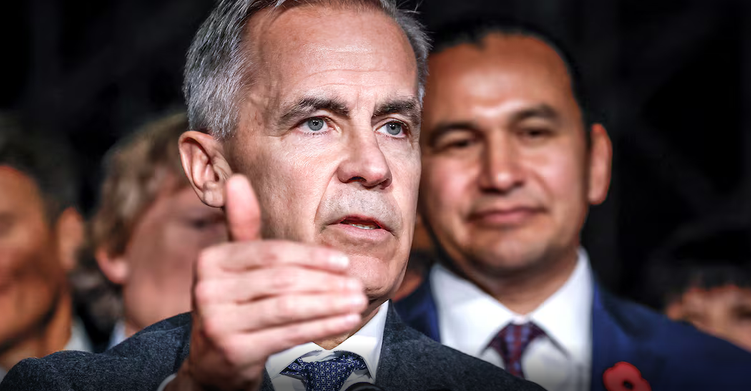

OTTAWA -- As Mark Carney’s federal policy framework begins to take definitive shape in Canada's political landscape, it presents a meticulously engineered vision for the nation’s future. It is a framework built upon the language of institutional modernization, green infrastructure transition, and structural economic resilience. In the polished corridors of Ottawa, policy discussions move effortlessly through fiscal metrics, sustainable development goals, and the macro-economics of national self-sufficiency. Yet, beneath this sweeping administrative architecture lies a foundational and dangerous abstraction.
The political class has long treated the concept of national reconciliation as an intellectual exercise—a matter of legislative window-dressing, semantic adjustments to archaic statutes, and carefully managed public announcements. But for Indigenous people, and particularly for Indigenous women, reconciliation is not a theory. It is a matter of basic physical survival, bodily autonomy, and the right to exist safely within their own territories without fearing the very state apparatus that claims to govern them.
True economic resilience and social cohesion cannot be engineered through top-down fiscal policies while the Canadian state’s primary law enforcement and administrative bodies continue to operate with colonial impunity. High-level policy debates regarding Indigenous sovereignty and updates to the archaic Indian Act are entirely hollow if they fail to confront the immediate, violent, and negligent reality of how federal institutions treat Indigenous women on the ground. The moral and political legitimacy of any future government relies not on its ability to draft sophisticated policy papers, but on its courage to aggressively dismantle the systemic rot, bureaucratic indifference, and entrenched police violence that define the daily interface between Indigenous women and the Canadian state.
This is not a historical grievance to be filed away in the archives of past national shames. It is an urgent, ongoing human rights emergency unfolding in real-time across the country. The deep-seated institutional negligence of the Royal Canadian Mounted Police (RCMP) and the federal justice system ensures that for an Indigenous woman, asserting her fundamental rights or questioning state authority does not invite protection. Too often, it invites swift, severe, and state-sanctioned retaliation.
I. The Ground Zero of Institutional Failure: Josie’s Narrative
The systemic rot within Canada's federal apparatus is best understood not through abstract statistics, but through the specific, harrowing encounters of those who survive it. The experience of Josie, a Mohawk First Nations woman currently fighting a landmark battle before the Canadian Human Rights Tribunal, serves as a damning indictment of the state’s law enforcement machinery. For Josie, the grand promises of federal reconciliation shattered completely on August 4, 2023, during an encounter with the RCMP that exposed the raw, authoritarian underbelly of Canadian policing.
On that summer day, Josie found herself interacting with an RCMP officer. Rather than experiencing the objective, professional public service that Canadian citizens are conditioned to expect, she was met with immediate hostility and a profound assertion of colonial entitlement. Recognizing the problematic nature of the officer’s conduct, Josie did what any individual seeking safety within a democratic society should be entitled to do: she questioned the officer's authority and calmly asserted her right to be treated with basic human dignity and respect under natural law.
The officer’s response was a chilling manifestation of institutional arrogance. Rather than de-escalating the situation or providing a lawful rationale for his interventions, the officer dismissed her identity and her legal arguments entirely, labeling her a "freeman"—a derogatory tactical designation often used by law enforcement to delegitimize individuals and justify aggressive state overreach. He then delivered a line that encapsulates the terrifying reality of unchecked police power in Canada:
"This is Canada, I don't need a reason."
In that single phrase, the myth of constitutional protection for Indigenous people dissolved. Recognizing the immediate danger she was in, Josie pulled out her cellphone to record the interaction—a vital and legal act of civilian self-preservation aimed at securing a transparent record of state conduct. The response from the officer was immediate, escalatory, and violent. Her cellphone was forcibly confiscated, cutting off her only line of objective documentation, and the encounter degenerated into severe physical violence. Josie was violently slammed to the ground by the officer.
The physical assault was merely the first layer of institutional negligence. While pinned to the ground, the physical trauma triggered a severe medical crisis. Josie began experiencing extremely painful, involuntary muscle spasms that resembled seizure-like movements. Despite her visible, acute medical distress, and despite the officer being explicitly aware of her pre-existing spinal disabilities, the basic human duty of care was completely abandoned. No ambulance was called. No medical first responders were summoned to the scene.
Instead, while incapacitated by pain and experiencing a neurological emergency, Josie was violently handcuffed. The officer then dragged her across the ground toward the police cruiser, compounding her spinal injuries and inflicting immense physical and emotional trauma.
Rather than seeking medical intervention for a citizen in clear distress, the officer signaled for backup. Within minutes, the scene was swarming with additional law enforcement vehicles, including marked units and low-profile vehicles described as "ghost trucks." For Josie, pinned against the gravel, the arrival of these forces did not bring relief; it brought terror.
She watched helplessly as another arriving officer approached her cellphone, which had been left on the roof of her vehicle. In that moment, isolated and physically broken by federal agents, she was consumed by a realistic and terrifying fear: that the vital video evidence of the encounter—the only objective proof of the unprovoked violence used against her—was about to be permanently confiscated, altered, or concealed by an institution notorious for protecting its own.
II. The Administrative Shield: Negligence Post-Incident
The violence of August 4, 2023, was horrific, but the institutional betrayal did not end when the police cruisers drove away. The secondary trauma inflicted upon Josie occurred through the quiet, cold mechanisms of bureaucratic inertia and administrative indifference—a sophisticated form of structural violence designed to exhaust complainants and bury systemic failures under layers of paperwork.
On January 4, 2024, Josie took the courageous step of formally reporting the incident. She sought to ensure that the physical violence, the total failure to provide medical care, and the destruction of her peace were meticulously documented within the official record. Her report was not a singular, isolated grievance; it was the culmination of an exhausting, months-long effort to secure federal protection against a broader, highly coordinated pattern of stalking, harassment, threatening communications, and intimidating activity that she had been subjected to and had repeatedly brought to the attention of law enforcement.
Josie did not approach the state with vague allegations. She provided federal policing authorities with an extensive repository of evidence, including highly detailed logs, photographs, specific vehicle descriptions, and concrete material identifying the vectors of harassment threatening her life and sanity. She followed every administrative protocol, filled out every form, and engaged with the system in good faith, operating under the assumption that the fundamental purpose of a police institution is to investigate crime and protect vulnerable citizens.
Instead, her appeals for safety were met with total administrative paralysis. The extensive evidence she provided disappeared into a bureaucratic void. No meaningful investigative steps were taken to neutralize the threats against her; no protective measures were instituted to ensure her safety. Rather than finding a shield in the law, Josie found herself completely isolated, left to navigate an ongoing campaign of intimidation without a single shred of institutional support.
This total failure to investigate her complaints left her with a devastating realization: the federal police institution was not merely indifferent to her suffering; its systemic structure rendered it incapable of viewing an Indigenous woman as a victim worthy of protection. The system did not fail by accident; it functioned precisely as it was designed to—acting as a barrier to justice rather than a conduit for it. Josie was left constantly looking over her shoulder, abandoned by the state, and forced to ask a fundamental question that echoes across Indigenous communities nationwide: How can you rely on a federal policing institution for protection when that very institution is the primary source of your terror and neglect?
III. The Anatomy of Systemic Failure: Comparative Matrix
The harrowing encounter experienced by Josie on August 4, 2023, is not an isolated malfunction of local law enforcement. Instead, it serves as a microcosm of a deeply entrenched, historic, and structural crisis within the Royal Canadian Mounted Police (RCMP) and broader federal institutions. When an investigative lens is applied to her experience, clear parallels emerge between her treatment and documented, systemic failures across Canada.
Historically and presently, federal policing institutions have consistently failed Indigenous people through a toxic combination of over-policing and under-protection, a culture of impunity, and aggressive institutional self-preservation.
| Josie’s Experience | Broader Systemic Patterns & Examples |
|---|---|
| The "Freeman" Label & State Arrogance: An RCMP officer dismissed her assertion of natural law, labeled her a "freeman," and declared, "This is Canada, I don't need a reason." | Dehumanizing Language & Bias: This mirrors an ongoing culture of racism within the force. In early 2025, a B.C. Supreme Court ruling condemned RCMP officers for using grossly offensive, racist, and dehumanizing language against Wet'suwet'en land defenders. The National Inquiry into Missing and Murdered Indigenous Women and Girls (MMIWG) explicitly tied this dismissive, arrogant culture back to the RCMP's colonial foundations. |
| Physical Violence & Disregard for Medical Distress: Being violently slammed to the ground, handcuffed, and dragged despite visible, agonizing muscle spasms and pre-existing spinal disabilities. | Abuse of Detainees & Over-Classification: Indigenous people are vastly overrepresented in RCMP use-of-force incidents and face extreme vulnerabilities while in custody. This systemic brutality is currently the subject of a massive certified federal class-action lawsuit (Koskie Minsky LLP) regarding the systemic physical assault and mistreatment of Indigenous people held in RCMP detachment cells in northern territories. |
| Evidence Seizure & Fear of Cover-Up: The immediate confiscation of Josie’s cellphone and the sight of another officer approaching it on her car roof, leaving her terrified that video evidence of state violence would be concealed. | A History of Concealment & Impunity: The fear of an institutional cover-up is validated by history. In mid-2026, Alberta's police watchdog (ASIRT) concluded a massive investigation into allegations that high-ranking RCMP officers covered up decades of sexual abuse and harassment committed by Mounties against vulnerable Indigenous girls in Prince George, B.C.. A landmark 2013 Human Rights Watch report, Those Who Take Us Away, extensively documented how the RCMP's lack of oversight and inadequate complaint procedures allow evidence of police abuse against Indigenous women to disappear into a vacuum of impunity. |
| Bureaucratic Inertia & Unaddressed Reports: Her January 4, 2024 report documenting the violence—alongside detailed evidence of ongoing stalking and harassment—was met with administrative indifference, leaving her unsafe. | The Crisis of Under-Protection: This highlights the classic paradox where Indigenous people are heavily targeted by police but completely neglected when they plead for protection. In March 2026, the Canadian Human Rights Tribunal ruled in Woodgate v. RCMP that Mounties systematically discriminated against Indigenous crime complainants and witnesses during investigations, routinely failing to follow up or inform them of outcomes, which led victims to realize they simply weren't believed. |
| The Battle for Human Rights & Federal Pushback: Filing a formal human rights complaint on the basis of identity, sex, and disability, only to face an unyielding federal apparatus. | Federal Retrenchment & Legal Maneuvering: The federal government’s failure to redress Josie’s concerns matches its aggressive strategy to shield the RCMP from accountability. Following the landmark Woodgate ruling in early 2026, the Attorney General of Canada filed applications in federal court to completely quash the human rights decision, making the jaw-dropping legal argument that police investigations are not a "public service" and therefore should be entirely exempt from the Canadian Human Rights Act. |
IV. The Historical Matrix: Roots of Structural Violence
To analyze Josie’s experience as merely the product of an isolated administrative oversight is to completely misunderstand the nature of Canadian policing. The violence and negligence she endured are deeply rooted in the historical DNA of the Royal Canadian Mounted Police. The force was explicitly created as a paramilitary colonial tool designed to displace Indigenous populations, subjugate communities, and enforce the dominion of the federal crown over their lands and bodies.
This historical reality was laid bare in the conclusions of the Final Report of the National Inquiry into Missing and Murdered Indigenous Women and Girls (MMIWG). The National Inquiry explicitly declared that the ongoing crisis of violence against Indigenous women is a form of race-based genocide "caused by state actions and inactions rooted in colonialism and colonial ideologies".
Josie’s encounter with an officer who proudly declared, "This is Canada, I don't need a reason," is a direct, modern manifestation of this colonial ideology. The terror Josie felt as she watched an officer approach her cellphone—fearing a systematic cover-up—is an entirely rational fear backed by over a century of documented police behavior. The MMIWG National Inquiry explicitly condemned the RCMP's "lack of accountability and inadequate complaint and oversight procedures," noting that these structural flaws have historically created a vacuum of absolute impunity where police misconduct against Indigenous women is systematically ignored or actively hidden from public scrutiny.
V. Legal Retrenchment: The Federal War on Human Rights
The depth of the crisis becomes even more alarming when examining how the federal government and its institutions respond when caught red-handed in these systemic failures. Rather than accepting judicial oversight or implementing structural reforms, the federal apparatus consistently deploys its vast legal machinery to shield itself from public accountability.
Josie’s formal human rights complaint against the RCMP—which challenges the force on the basis of discrimination rooted in her Indigenous identity, her sex, and her physical disabilities—is unfolding within an incredibly hostile federal legal landscape. The Canadian state does not approach these tribunals with a spirit of reconciliation; it approaches them with an aggressive, retributive litigation strategy designed to preserve its own lack of accountability at all costs.
This pattern of federal retrenchment was dramatically exposed following the March 2026 Woodgate v. RCMP discrimination ruling. Rather than accepting the Tribunal’s findings and working to rebuild a broken system, the Attorney General of Canada filed sweeping applications in Federal Court to completely quash the human rights decision. In doing so, federal government lawyers put forward a staggering legal argument: they asserted that criminal and police investigations do not constitute a public "service" under the definition of the Canadian Human Rights Act, and therefore, the RCMP’s conduct during investigations should be entirely exempt from human rights legislation and tribunal oversight.
This legal maneuvering exposes the profound hypocrisy at the heart of Ottawa’s political discourse. While leaders like Mark Carney stand before microphones and deliver eloquent speeches about the importance of Indigenous sovereignty and human rights, the state’s own lawyers are actively arguing in federal courts that the national police force should have a legal license to discriminate against Indigenous people without being subject to human rights laws. By attempting to quash discrimination rulings and fighting victims like Josie at every turn, the federal government is actively weaponizing the state's legal machinery to maintain the very systems of colonial violence that the Inquiry condemned.
VI. The Broader Crisis of Federal Failures Across Portfolios
Beyond the RCMP, Josie’s struggle highlights how the federal government fails Indigenous people systematically across multiple portfolios, demonstrating that the systemic rot within Canada's federal institutions is not historical—it is present, violent, and actively protected by the state's legal machinery.
- The Correctional System: While Mark Carney discusses policy updates, Correctional Service Canada (CSC) continues to preside over a catastrophic incarceration crisis. Indigenous women now make up 50% of the entire federal female prison population, despite accounting for less than 5% of the general Canadian population. The landmark federal report Ten Years Since Spirit Matters proved definitively that federal prisons continue to systematically over-classify Indigenous women into maximum-security units, disproportionately subject them to isolating practices, and systematically deny them discretionary release and community integration options.
- Performative Reconciliation: Josie notes that reconciliation cannot simply mean changing legislation or making empty federal announcements. This echoes a national frustration with the implementation of the MMIWG Calls for Justice. While federal agencies publish regular compliance reports, grassroots organizations like the Canadian Feminist Alliance for International Action (FAFIA) point out that tangible, independent external oversight of federal bodies remains entirely absent, leaving Indigenous women continuously exposed to state-sanctioned negligence.
VII. Conclusion: The Litmus Test for the Carney Government
The ongoing discussion surrounding Mark Carney’s policy agenda and his vision for Canada cannot afford to remain insulated within the realm of economic theory and fiscal management. A nation cannot claim to be a modern, progressive democracy while its federal institutions actively perpetuate colonial violence, weaponize the courts to evade human rights oversight, and abandon Indigenous women to campaigns of systemic negligence and physical intimidation.
For Josie, and for Indigenous people across Canada, the true measure of a government’s commitment to reconciliation is not found in the elegance of its legislative announcements or the depth of its infrastructure budgets. It is found in whether an Indigenous woman can question a police officer’s conduct, document her own encounter with the state, report violence to law enforcement, and demand protection for her life without fearing that she will be slammed to the ground, denied medical aid, and subjected to state retaliation.
If the Carney government wishes to establish any shred of moral legitimacy or progressive leadership, it must move past the era of performative reconciliation. It must possess the profound political courage required to turn the power of the state inward—to aggressively reform and enforce unyielding, independent accountability on the RCMP and Correctional Service Canada. This requires a complete cessation of the federal government’s hostile legal campaigns to quash human rights rulings, the immediate implementation of an independent National Indigenous and Human Rights Ombudsperson, and an absolute commitment to ensuring that the rights, safety, and dignity of Indigenous women are the foundational cornerstone of Canada’s constitutional and political path forward. Sovereignty cannot exist without safety. Until the federal government confronts the violent reality of its own institutions, its promises of reconciliation are not a path to the future; they are merely a shield for the ongoing violence of the past.

Comments
There are 0 comments on this post