
Protect Canadian sovereignty: Own the drone code, not just the airframes
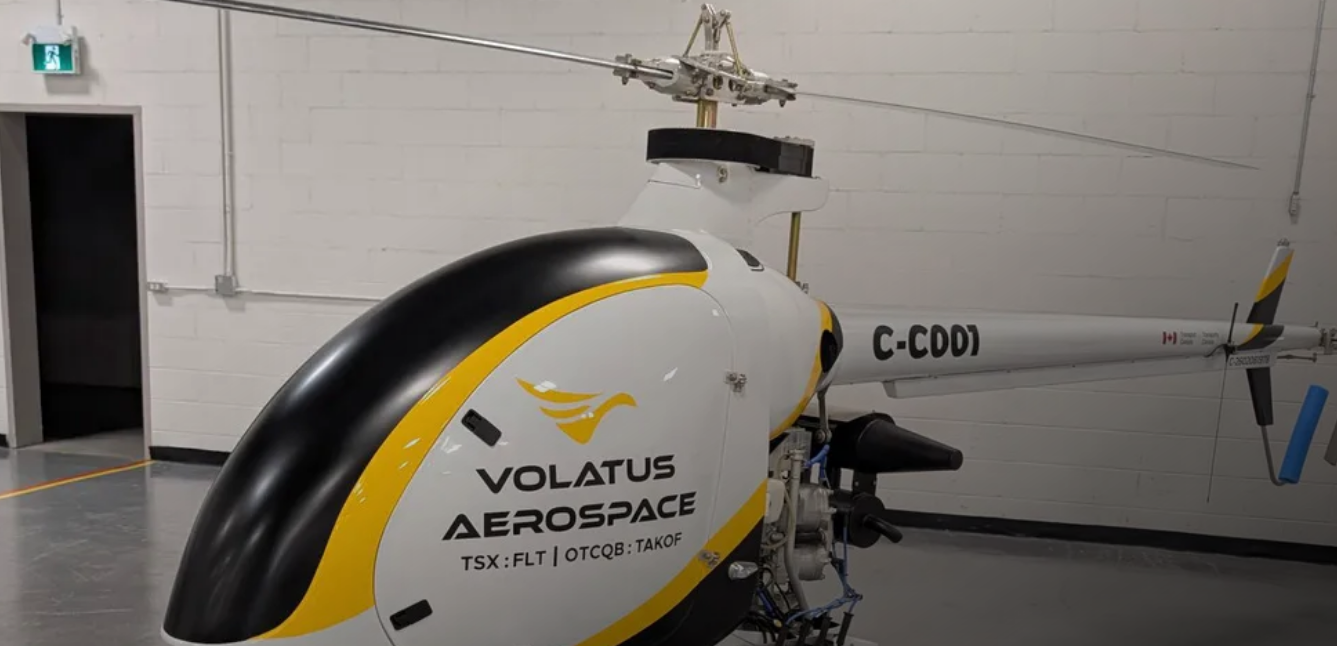

Inside Volatus Aerospace’s sprawling 50,000-square-foot facility at Mirabel Airport in Montreal, a lone worker currently tinkers beneath high overhead lights surrounded by foreign-made hardware and satellite internet gear. It is a quiet, modest scene for a factory floor that executives hope will soon house robots and over 100 staff churning out drones by the thousands—and it captures the exact tension defining Canada’s newest industrial ambition.
For decades, Canada’s defence establishment was content to let Washington guarantee North American security while Ottawa’s procurement system ignored domestic innovators, leaving homegrown firms to scrape by on commercial contracts or foreign sales. That era of comfortable complacency is dead.
Rattled by the sobering reality of modern warfare in Ukraine and an unprecedented fracture in U.S.-Canada relations, Ottawa has abruptly reversed course. With U.S. President Donald Trump openly musing about turning Canada into the "51st state," demanding to buy Greenland, and pressuring Ottawa over perceived weaknesses in North American northern defence, building a domestic defence industry is no longer just an economic stimulus measure—it is an existential exercise in national sovereignty.
In response, Prime Minister Mark Carney’s government has unveiled a Defence Industrial Strategy anchored in "Buy Canadian" principles, backed by a proposed $2.3-billion budget allocation over five years to take domestic drone technology from concept to production. Carney recently noted that while the Canadian Armed Forces currently possess a mere 2,000 drones, the military will need millions in the years ahead. To get there, Ottawa has pre-qualified hundreds of domestic firms—from established players like Saskatoon’s Draganfly to garage-born startups like Saguenay’s Beonyx Robotics—sparking an internal arms race for military contracts.
On paper, this urgency is welcome. Unlike building submarines or fighter jets, drone manufacturing has a relatively low barrier to entry, making it an ideal testing ground for Canadian industrial agility. Yet as billions of taxpayer dollars prepare to flow into this sector, policymakers must avoid a dangerous trap: confusing low-margin assembly lines with genuine strategic independence.
If Canada’s goal is to prove to Washington—and the world—that we can patrol and defend our own territory without relying on American handouts or foreign supply chains, we must understand where real power lies in unmanned warfare.
Today, drone hardware is rapidly becoming a disposable commodity. As Volatus CEO Glen Lynch bluntly put it, products are temporary, and the technology evolves every 30 days. Tellingly, even after winning a contract to supply up to 5,000 tactical drones to the Canadian military, Volatus outsourced its initial 100-unit test batch to a firm in the United Kingdom rather than building them in-house right away. That isn't a failure of ambition; it is a recognition that locking into a single physical design too early is a recipe for obsolescence.
True sovereign capacity means the ability to build, repair, and upgrade critical systems without depending on the goodwill of foreign capitals. To achieve that, Ottawa needs to look beyond plastic frames and rotors. The real strategic prize lies in the invisible "technology stack"—the artificial intelligence, sensor fusion, encrypted communications, and autonomous navigation software that allow drones to operate when signals are jammed or foreign satellite networks are unavailable.
Nowhere are the stakes of sovereignty higher than in the Arctic. Washington’s aggressive rhetoric regarding northern security is a direct challenge to Canada’s control over its own waters and airspace. Yet patrolling Canada’s vast northern coastline—with its sub-zero temperatures, lack of infrastructure, and dead communication zones—is impossible with off-the-shelf commercial gadgets.
Conquering those brutal conditions requires sovereign, cold-weather propulsion systems and resilient AI navigation capable of flying blind when signals drop. If Canadian companies master Arctic drone intelligence, Ottawa won't just silence critics in the White House by securing our own northern flank—it will give Canada vital leverage in trade and security negotiations by becoming an indispensable technology provider to NATO allies.
At the same time, defending sovereignty requires strict guardrails on ownership and supply chains. Hand-built startups operating out of garages cannot scale overnight, nor can they survive if government demand dries up during peacetime. Moreover, as recent scrutiny over U.S. strategic investments in Canadian drone firms—including ties to figures in the Trump orbit—demonstrates, Ottawa must ensure that taxpayer-funded intellectual property doesn't quietly migrate south of the border.
As Draganfly CEO Cameron Chell noted, the rupture in U.S.-Canada relations could ultimately prove a blessing if it forces Canada to stand on its own feet. The sun, moon, and stars have finally aligned to create domestic demand for a homegrown defence sector. But spending billions merely to glue together millions of disposable aircraft would be a hollow victory. Real sovereignty won't come from owning the assembly line—it will come from owning the brains inside the machine.

Comments
There are 0 comments on this post