
Trump's imperial ambitions must not strip Brazil of its future
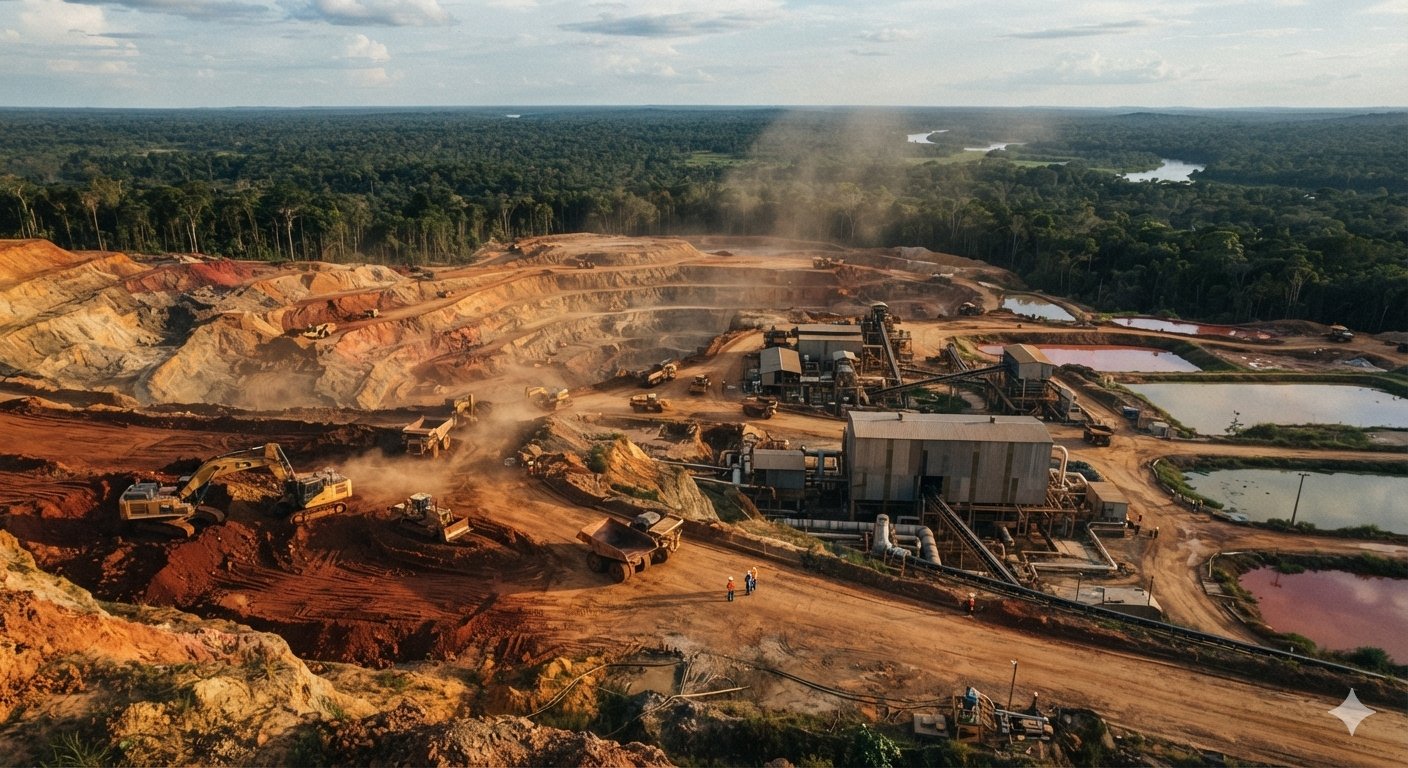

The global race to secure the building blocks of the 21st-century economy is undergoing a massive geopolitical realignment. As Western nations scramble to decouple their technology and green energy supply chains from China, they have found a new geological darling: Brazil. Armed with some of the world’s largest unexploited reserves of rare earth elements—critical for electric vehicle motors, wind turbines, and defence systems—Brazil is being positioned as the ultimate "friendly" supplier. Yet beneath the optimistic corporate press releases lies a stark, uncomfortable reality. The rush to extract these elements threatens to replicate the historic, destructive patterns of resource exploitation in the Global South.
This aggressive rush highlights a deeper, more troubling driver: the revival of Donald Trump’s highly transactional foreign policy, which treats South American sovereign resources as strategic stockpiles to fuel the war-making ambitions of a dominant political-military-industrial complex. Under this purely transactional framework, international diplomacy is stripped of its normative values and reduced to a zero-sum game of resource accumulation. By viewing Brazil’s geological wealth through the narrow lens of American military and industrial dominance, the administration actively incentivizes the rapid, destabilizing extraction of critical minerals. Trump’s explicit rhetoric of global dominance and economic nationalism reshapes this resource grab into a blunt display of imperial ambition. The primary objective is not a cooperative, sustainable global transition, but rather the aggressive hoarding of raw materials to ensure that the domestic defense apparatus remains unrivaled in an era of renewed great-power competition. For Trump, environmental regulations are mere bureaucratic nuisances, and foreign nations are either assets to be leveraged or rivals to be subdued.
For Latin America, this script is dangerously familiar. The current scramble for rare earths mirrors a long, dark history of U.S. resource colonialism and interventionism in the region. For over a century, Washington has treated Central and South America as an extraction zone for its industrial and military appetites. One cannot look at the pressure on Brazil today without hearing echoes of the early 20th century, when the United Fruit Company operated as a corporate extension of American state power, exploiting land and toppling governments to secure agricultural monopolies. Similarly, the mid-century obsession with Chilean copper and Bolivian tin saw the U.S. prioritize raw material access over democracy, actively backing authoritarian regimes to guarantee the flow of metals to American factories. Today, Trump’s unabashedly extractive doctrine revives the ghost of the Monroe Doctrine, asserting a modern form of resource hegemony where the sovereignty and ecology of Latin American nations are secondary to Washington's strategic stockpiles.
The deep irony of utilizing a "green transition" narrative to justify this extraction is laid bare when examining the ultimate end-user of these stockpiled minerals: the American military apparatus. The Trump administration’s prioritization of military expansion over climate diplomacy funnels these critical minerals directly into a machine built for global power projection. The U.S. Department of Defence is historically one of the world's largest institutional polluters, consuming more liquid fuels and emitting more climate-changing gases than most medium-sized countries. The military’s record of environmental destruction is vast and enduring. From the deployment of Agent Orange during the Vietnam War—which defoliated millions of acres of pristine jungle and poisoned water systems for generations—to the toxic legacy of burn pits in Iraq and Afghanistan, the military-industrial complex has consistently left a trail of ecological ruin. Domestically and internationally, naval bases and airfields have contaminated local aquifers with carcinogenic PFAS "forever chemicals" and aviation fuel. To strip Brazil's fragile biomes of rare earths to power a war machine with this track record is an act of profound ecological hypocrisy.
Furthermore, Trump’s unilateralism and zero-sum approach to international relations are actively undermining global environmental stability. By framing climate action and technology not as areas for global, multilateral cooperation but as battlegrounds for economic dominance, his policies fracture international climate efforts. Instead of collaborative research into sustainable extraction or recycling methods for rare earths, the world is subjected to a fractured supply-chain war. Trump's rejection of multilateral environmental agreements creates a race to the bottom, signaling to international mining firms that short-term yield trumps long-term ecological stewardship. This climate of heightened tension forces developing nations like Brazil to weaken their own environmental guardrails to accommodate the immediate, aggressive demands of superpowers panicked over mineral security.
The physical battleground for this geopolitical friction is carved directly into Brazil's most vital, irreplaceable ecosystems. The Amazon rainforest—the planet’s primary carbon sink—faces catastrophic disruptions as mining infrastructure slices through pristine canopy, poisoning river systems with toxic tailing runoff. Equally imperiled is the Cerrado, Brazil’s vast tropical savanna, which acts as the "birthplace of waters" feeding South America's major river basins. The heavy chemical footprint and immense water demands of rare earth processing threaten to deplete local aquifers and irreversibly pollute a biome that is already vanishing at twice the rate of the Amazon.
This short-sighted, transactional American approach stands in stark contrast to China's sophisticated, long-term investment strategy in Brazil's mineral sector. While Trump relies on coercive diplomacy, trade threats, and frantic stockpiling for military dominance, Beijing has spent over a decade embedding itself into the foundational architecture of Brazil’s economy. Through state-backed state-owned enterprises, China has systematically acquired equity in operational mines, financed major infrastructure corridors, and invested in domestic energy grids. By anchoring its presence in long-term supply agreements and deep industrial partnerships rather than immediate political compliance, China secures a structural chokehold on the market while offering Brazil capital integration that Trump's purely extractive, "America First" model fails to match.
To survive this pincers movement between superpower rivalries, Brazil must reject the role of a passive, extractable colony. Brasília has the legal and constitutional tools to resist this intense external pressure through a sovereign mineral defense framework. First, the federal government must enforce Article 231 of the Brazilian Constitution, rendering any exploration application that infringes upon Indigenous or traditional Quilombola lands a legal non-starter without absolute Free, Prior, and Informed Consent. Second, Brazil should implement a "Resource Value Retention" mandate, legally banning the raw export of unprocessed rare earth ores. By mandating that chemical separation and industrial refining occur domestically, Brazil can legally throttle the flow of raw materials to the American military-industrial complex until Western capital agrees to build high-tech, environmentally fortified manufacturing hubs within Brazilian borders.
When foreign policy is dictated by the immediate demands of a political-military-industrial complex, long-term ecological stability and local sovereignty are consistently sacrificed for short-term tactical advantages. The rush into Brazil’s fragile biomes is an inevitable symptom of an extractive ideology that prioritizes global power projection over global climate justice. If the green transition simply shifts the burden of environmental degradation from carbon emissions in the Global North to toxic tailings dams in the Global South to fuel a forever-war apparatus, it is not a transition at all—it is a relocation of the crisis. Through a strict framework of legal resistance and resource sovereignty, Brazil can refuse to be a mine stripped for empire, asserting itself as a partner that must be respected.

Comments
There are 0 comments on this post