
From School Desks to Work and Displacement:



How Are Wars and Poverty Threatening the Future of Children in the Developing World?
A child’s loss of education does not begin when they leave school permanently. It may start much earlier, when the cost of a school bag and books becomes a burden on the family, when war destroys their school, when displacement forces them to abandon their classroom, or when working becomes necessary to support their family. In developing countries, these factors intersect, placing millions of children at risk of losing access to education, with consequences that extend into their own futures and those of their communities.
According to UNESCO reports, approximately 70% of children in low- and middle-income countries are still unable to read and understand a simple text appropriate for their age. Meanwhile, the number of children and young people out of school worldwide is estimated at around 272 million. The problem does not end with school enrollment. Millions of young people leave education without completing secondary school, while the global higher education enrollment rate stands at approximately 40%, reflecting a persistent gap in access to and continuity of quality education.
When War Enters the Classroom
The education crisis becomes even more complex when communities come under the weight of wars, conflicts, and humanitarian emergencies. A child who loses their school loses more than just a place to learn. They may also lose a safe space, a daily routine, social relationships, and an opportunity to escape the cycle of poverty.
In Gaza, approximately 700,000 school-age children have been deprived of education, while around 92% of schools have been partially or completely damaged, severely affecting the education infrastructure. In Sudan, the war has created one of the world’s most severe education crises, with estimates indicating that approximately 13 million out of 17 million school-age children are out of school.
The situation is not very different in other regions. In West and Central Africa, more than 14,800 schools were closed due to violence and conflict during 2025, affecting approximately 3 million children.
In Yemen, around 3.7 million children are out of school. UNICEF data also indicates that 94.7% of children aged 10 are unable to read and understand a simple text, highlighting that the crisis is not only about how many children are in school, but also about what they are actually learning.
In Lebanon, approximately 420,000 out of 1.51 million school-age children are out of school. Meanwhile, 340 schools across the country have been damaged, including 17 that were completely destroyed, making it even more difficult to restore education in communities affected by conflict.
A Child Does Not Lose Just a School Year… They Lose a Part of Themselves
When a child leaves school, the consequences are not necessarily limited to losing lessons and certificates. In impoverished communities or those affected by war and displacement, dropping out can trigger a chain of risks that begins with weakened basic skills and may extend to child labor, early marriage, exploitation, and persistent poverty.
Returning to school under these circumstances is more complicated than simply providing a classroom seat. A child may need books, a school bag, and school clothes, but they may also need nutritious food, safe water, an environment that protects them from violence and bullying, and psychological support to help them cope with the effects of war or displacement.
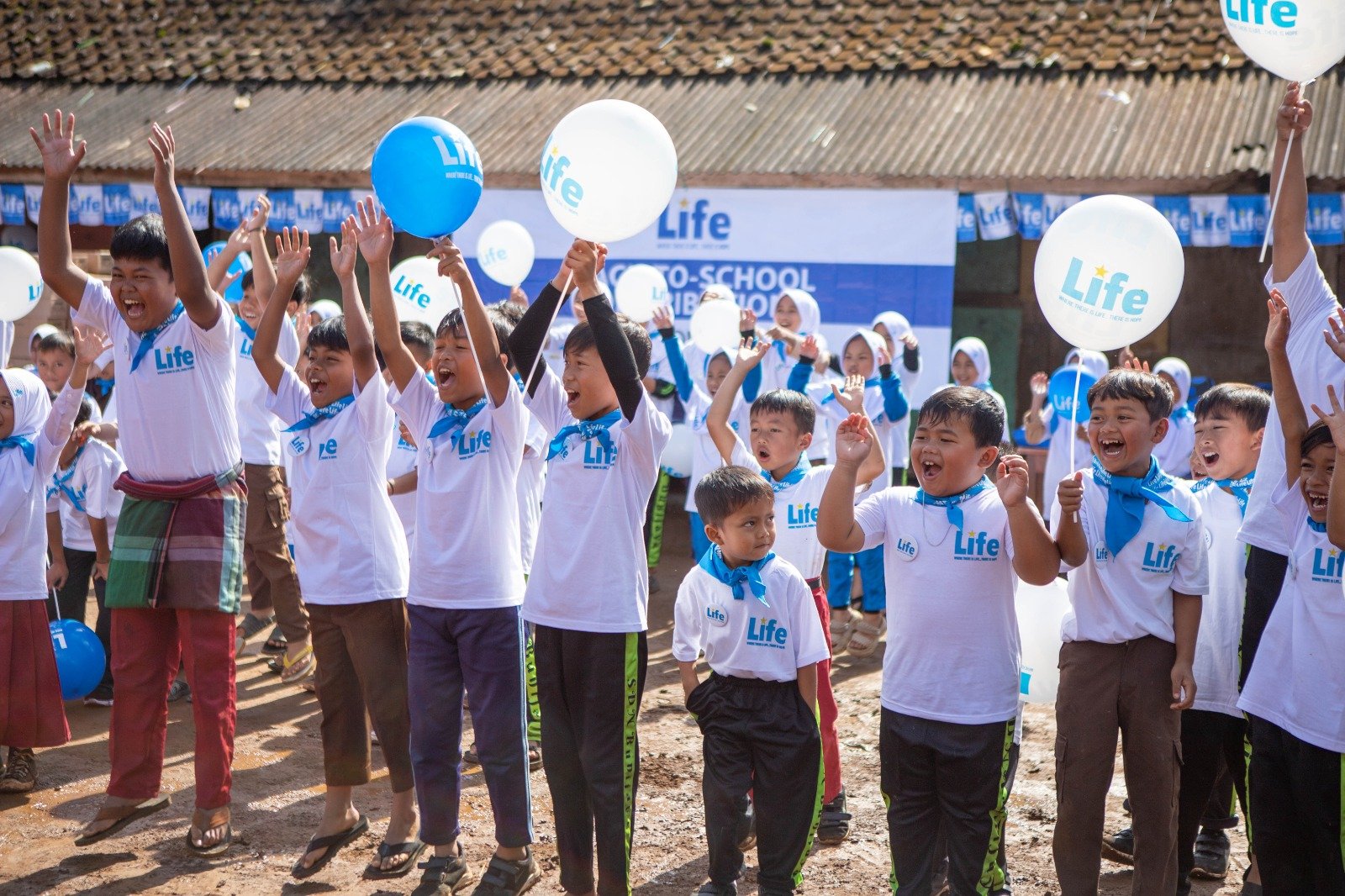
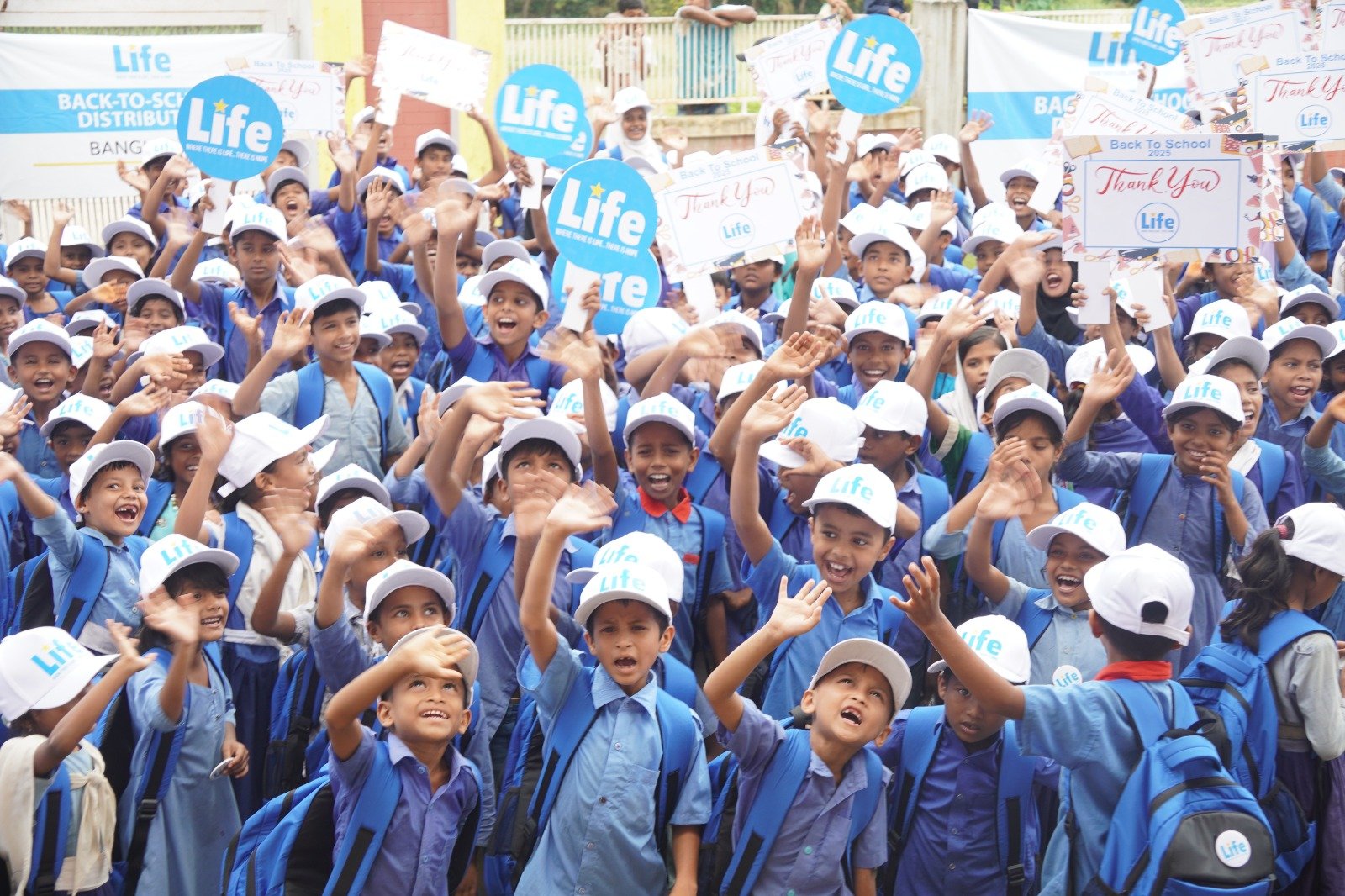
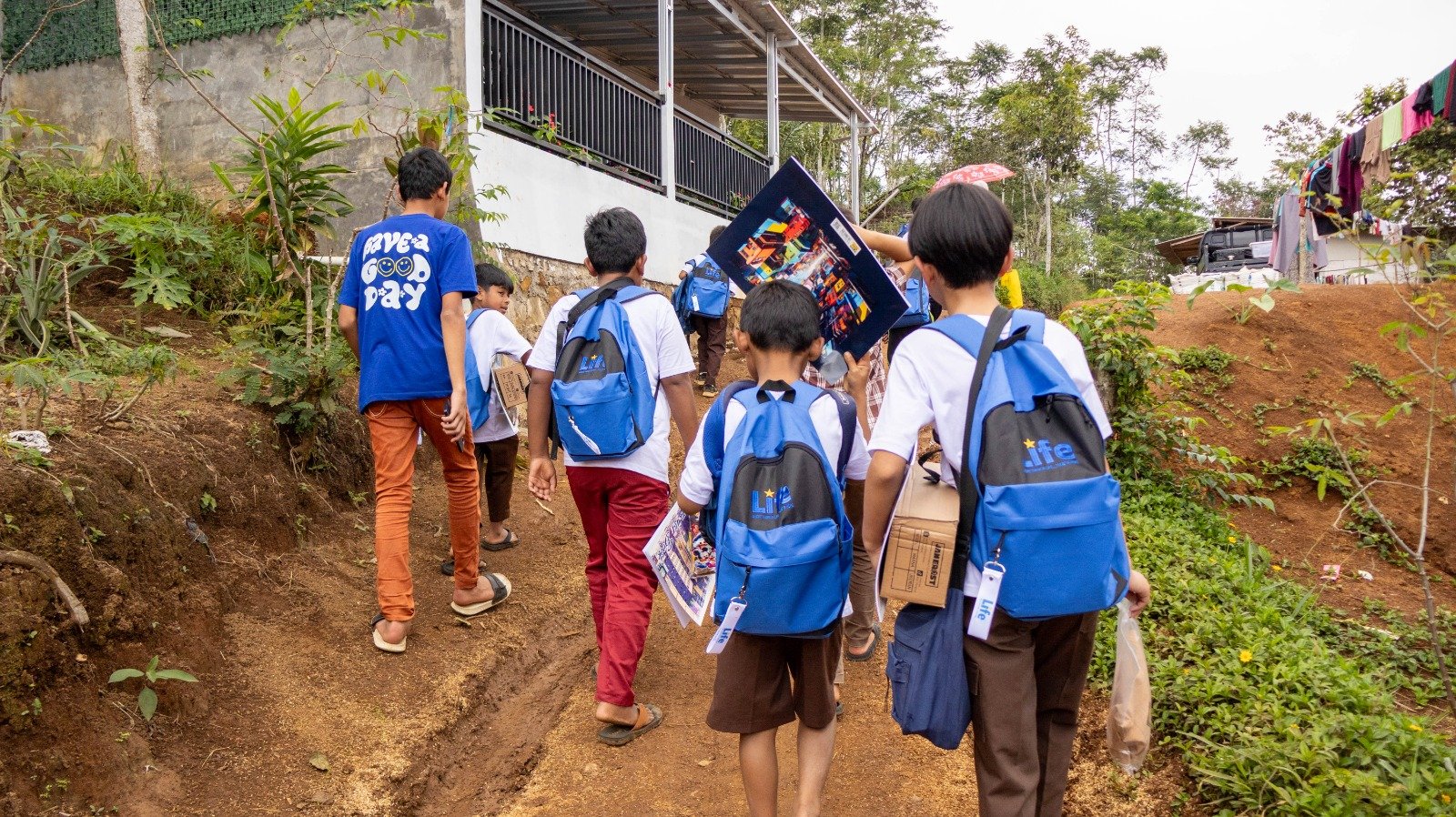
These needs are clearly reflected in the testimonies of children whom Life for Relief and Development helped return to education after their circumstances had nearly deprived them of it.
In Gaza, Safiya, 12, says she lost hope of continuing her education after the war and the destruction of her home, before an educational academy helped her regain her focus on studying. She says that being in an educational environment, along with receiving breakfast, helped her cope with fear and regain a sense of normality in her life.
In Yemen, eight-year-old Razan describes another aspect of the crisis. Because of poverty, she had to borrow pens and school supplies, which made her feel embarrassed in front of her classmates.
Meanwhile, 11-year-old Faizullah from Bangladesh describes how he felt when he went out to work and saw other children heading to school. He says that returning to education restored his dream of becoming a doctor.
In Afghanistan, Fatima, a mother of six orphaned children, says that the cost of education placed considerable pressure on her family. When her children stopped attending school, she was forced to face increasingly difficult choices, until the support they received helped them return to the classroom.
Despite the differences in countries and circumstances, these stories reveal a common reality: for a child living in poverty, displacement, or the aftermath of war, education is not a luxury. It may be a way out of an entire cycle of risks.
What Does a Child Need to Stay in School?
On the ground, there is no single answer to the education crisis. In some communities, rebuilding schools is the priority, while children in other areas need books, desks, water, or scholarships. In conflict zones, psychological support may become an essential part of the educational process itself.
For this reason, Life has developed its education support programs over the past decades. Its work has expanded from simply providing school supplies to building and rehabilitating schools, training teachers, supporting higher education, providing scholarships, and introducing psychosocial support programs in crisis-affected environments.
Marima Touray, Director of Life’s Sierra Leone Office, says that students’ absence from school does not only create educational gaps, but may also worsen illiteracy, school dropout rates, child labour, and child marriage. She believes that restoring education requires a safe, flexible, and inclusive environment, alongside psychosocial support programs that address the needs of the most vulnerable groups.
From Books to Building a Complete Learning Environment
Within this context, Life’s experience in education spans more than three decades. Its programs began in 1994 by providing textbooks and academic references to medical colleges and establishing training centers, alongside supplying school materials, rehabilitating schools that had become unusable, and supporting teacher training and qualification programs.
Over time, these projects developed to include the construction of new schools and the expansion of educational opportunities for the most vulnerable groups. They also included scholarship support for university students pursuing scientific disciplines.
Education at the Heart of Humanitarian Crises!
The need for more flexible educational models has become particularly evident in conflict zones. In Gaza, providing a classroom alone is no longer sufficient amid the destruction of schools, displacement, and the psychological effects of war.
In this context, Life established an educational academy in Gaza that benefited 2,633 students. This was accompanied by psychological support programs inside educational tents, benefiting approximately 900 male and female students. In addition, Al-Amal School was opened this year, while education projects in Syria and higher education support programs continue.
Safiya says that attending the academy not only helped her continue her education, but also gave her a space to focus away from fear. This highlights the importance of education in war zones: a school can sometimes become part of the psychological and social response to a crisis, rather than merely a place where curricula are delivered.
Education as an Investment in the Future
The impact of education does not end with the school years. University scholarships, particularly in fields where communities face shortages, can open new pathways into the labor market for young people and contribute to developing local expertise.
Naeem Rohani, Director of Life’s Afghanistan Office, says that university scholarships enable students from low-income families to access higher education and help reduce disparities between social groups, particularly in rural and marginalized communities. They can also help address shortages in vital fields such as healthcare, education, and engineering.
From this perspective, supporting education becomes an investment that extends beyond the individual child. The doctor who gains access to higher education, the teacher who receives training, and the child who remains in school instead of working all represent part of a community’s capacity to recover and grow.
More Than 292,000 Students Over 34 Years
Over a period of 34 years, Life for Relief and Development education support programs have reached 45 countries and benefited more than 292,000 students through school construction and rehabilitation, the provision of school supplies and books, support for university scholarships and higher education, and other programs, with total spending approaching $198 million.
But behind these figures and projects, one central question remains:
How can children be kept in school when war, poverty, displacement, and social isolation combine to push them out?
For more details:
https://lifeusa.org/#social-media

Comments
There are 0 comments on this post