
The Top 10 Reasons Kingston Belongs on the Alto High-Speed Rail Line
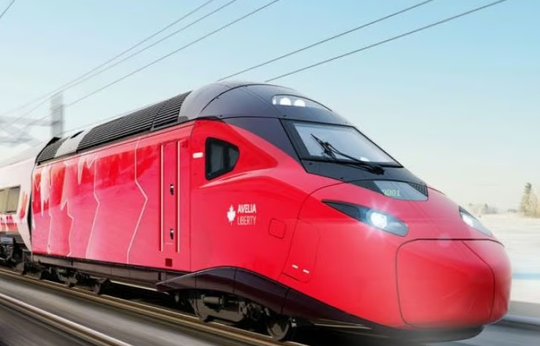


National infrastructure projects have always been a test of a country's character. True nation-building must heal and integrate the beating hearts of our communities, breathing social and economic vitality back into the historic hubs of eastern Ontario. For too long, traditional transportation planning has defaulted to a blunt instrument—laying down rigid tracks that slice recklessly through family farms, breaking the ecological continuity of our rural economies, and actively mocking the federal government’s core environmental promises. Cutting up fertile fields for a high-speed train is not only short-sighted; it directly subverts the integrity of Ottawa's green commitments.
Instead, the future of Canadian mobility lies in anchoring high-speed transit directly to established urban cores. By weaving high-speed rail into existing transportation corridors, we can revitalize downtown areas that are starving for regional integration while respecting our natural landscapes. Nowhere is this approach more urgently needed—or more clearly justified—than in the historic limestone city.
Here are the top ten reasons why Kingston must be a core stop on the Alto high-speed rail line.
1. Honouring Canada’s Founding History
Long before Ottawa claimed the title of national capital, Kingston served as the vibrant first capital of the Province of Canada from 1841 to 1844. Re-elevating this historic seat of governance into Canada’s modern high-speed transit framework pays homage to our national heritage while future-proofing its economic relevance.
2. Leveraging an Existing Passenger Mega-Hub
Kingston’s local station is already the fourth-busiest VIA Rail stop in the entire country. Routing the Alto line through this city taps into an eager, proven market of active rail passengers rather than gambling billions on speculative greenfield passenger projections elsewhere.
3. Protecting Farmland via Existing Corridors
Aligning high-speed tracks close to established pathways—such as existing rail lines or the Highway 401 corridor—spares pristine eastern Ontario farmland from being sliced in half by arbitrary new right-of-ways. It proves that progress does not require the destruction of agricultural livelihoods.
4. Fulfilling Federal Environmental Integrity
True environmental stewardship means minimizing disruption to nature, wetlands, and active agriculture. Avoiding destructive cross-country paths upholds the carbon, biodiversity, and conservation pledges expected of modern national infrastructure projects under the current government.
5. Revitalizing Urban Downtown Cores
Connecting Kingston directly to Toronto, Ottawa, and Montréal injects foot traffic, tourism, and direct commerce straight into the historic downtown core. This strategy prevents the economic isolation that occurs when transit systems are built in empty, disconnected suburban fields.
6. Powering Queen’s University and Innovation
A high-speed link provides seamless, rapid mobility for thousands of students, researchers, academics, and visiting professionals travelling to and from Queen's University. This connection transforms the city into an accessible, real-time extension of the Toronto-Waterloo innovation corridor.
7. Mitigating Regional Air Travel Voids
With local commercial flight options heavily underserved in eastern Ontario, high-speed rail provides a reliable, fast, all-weather ground alternative. It efficiently connects regional residents directly to global aviation hubs like Pearson International without the need for regional hopper flights.
8. Seamless Network Interconnection
Integrating Alto with traditional VIA Rail services creates a unified mobility network. Passengers from smaller, rural surrounding towns can effortlessly transfer between regional rail and ultrafast lines at a single, centralized Kingston hub.
9. Unlocking Regional Economic Growth
Slashing travel times to Toronto or Montréal to roughly 90 minutes turns Kingston into a highly attractive satellite for remote tech workers and expanding businesses. It allows the city to capture spillover growth from Canada's largest real estate markets while offering an unparalleled quality of life.
10. Community-Driven Public Consensus
Recent public consultations clearly show that regional stakeholders overwhelmingly support high-speed rail, on one critical condition: that it serves established population centres rather than bypassing local voices. Including Kingston respects the democratic feedback of the very citizens the line is meant to serve.

Comments
There are 0 comments on this post