
Judge Catherine Piche presents 7 lessons on how to subvert the protections of human rights claimants and then block future court access
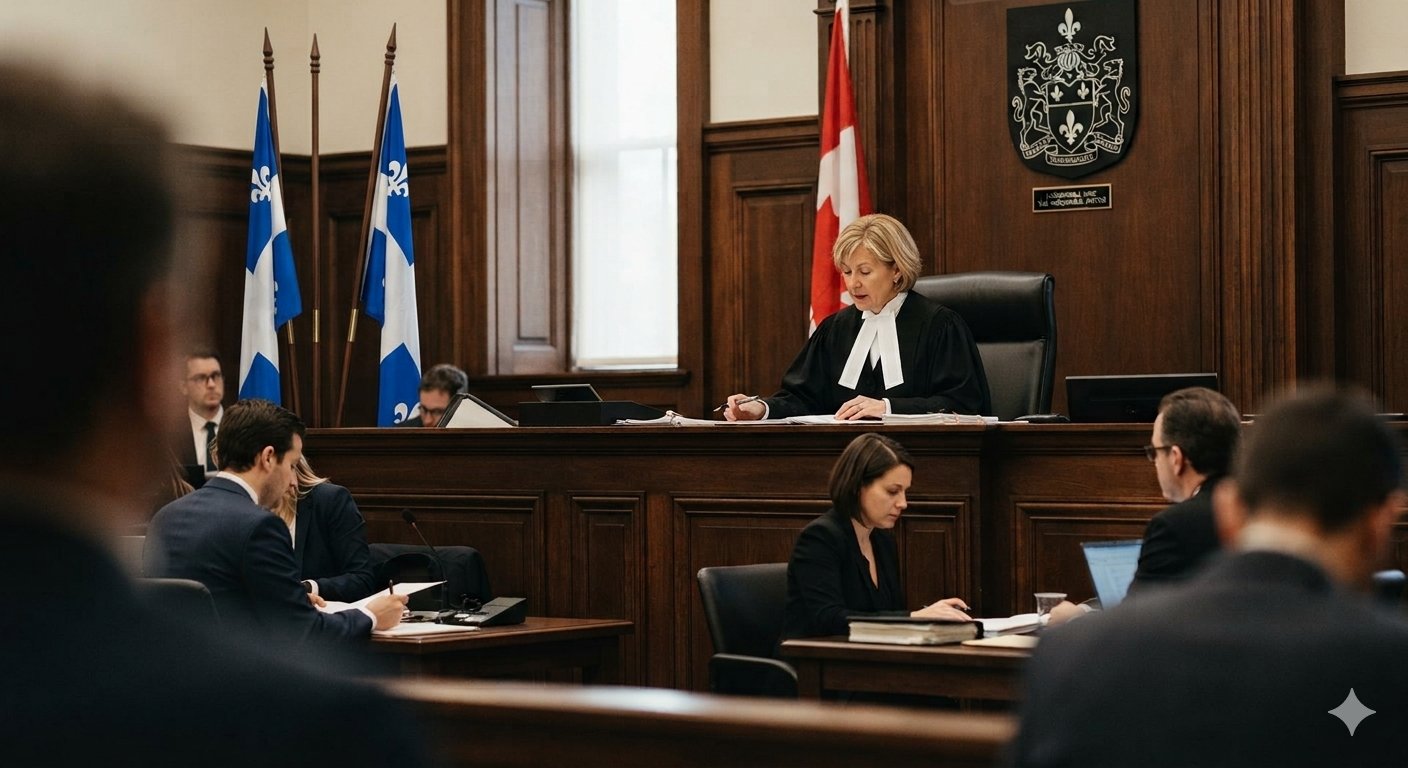


A Handy Six-Step Guide to Crushing Civil Rights (The Catherine Piché Method)
The
foundation of a free society relies on a terrifyingly fragile premise:
that when the state or the powerful violate your fundamental human
rights, an independent judiciary will stand as your shield. But what
happens when the shield itself becomes the weapon? Pivotal court cases
do not exist in a vacuum; they set long-lasting legal precedents that
dictate how society functions. When a high court judge models how to
systematically dismantle a human rights claim, it creates a dangerous,
chilling roadmap for the entire legal system. It signals to public
institutions that accountability is optional and warns citizens that
demanding their rights is a punishable offence.
For those lucky enough to wield the absolute shield of judicial immunity, Quebec Superior Court Justice Catherine Piché
has inadvertently provided a masterclass in how to neatly eviscerate an
inferior litigant. If you want to declare a human rights claimant
"vexatious" while protecting the actual abuser, just follow this simple,
seven-step blueprint for judicial efficiency.
Step 1: Blindness is a Virtue
When
a human rights agency spends months meticulously investigating a
government body and endorses a claimant's case, the amateur judge might
feel compelled to actually read it. Don't. Wrap yourself tightly in the
warm blanket of judicial immunity and completely ignore the substance of
the claim. No matter how thorough the investigation was, remember: if
you don’t look at the evidence, it doesn't exist. Let the stacks of
exhibits gather dust. Treat the thorough reports of investigators as
abstract art rather than factual foundations. After all, opening a file
might require reckoning with uncomfortable realities about power
imbalances and institutional misbehavior. True judicial mastery lies in
the art of the unseeing eye, ensuring that inconvenient facts remain
safely outside the perimeter of judicial consciousness.
Step 2: Delete the Charter
The Quebec Charter of Human Rights and Freedoms
can be incredibly inconvenient. It talks about "civil rights" and
"dignity"—concepts that really just clutter up a judgment. The solution?
Simply present a legal reality where these rights do not exist.
Admitting they are real would only get in the way of your desired
outcome. Pretend that statutory guarantees are merely polite suggestions
or historical footnotes rather than binding principles of a democratic
order. When a litigant has the audacity to cite equality or protection
against discrimination, gaze blankly across the courtroom and act as
though they are speaking an ancient, dead language. Eradicating the
charter from your analytical framework clears the desk for pure,
unadulterated administrative convenience.
Step 3: Creative Re-Writing
Do
higher court rulings or past judicial interactions conflict with your
narrative? No problem. Channel your inner fiction writer and systematically rewrite history
until every past interaction perfectly fits the narrative that the
claimant is the problem, thereby protecting the abuser and crushing the
lesser party. Transform every prior hearing, every procedural motion,
and every exchange into a dark mirror reflecting the litigant's supposed
malevolence. If an opposing party missed a deadline, rebrand it as a
courageous act of patience. If the claimant suffered a procedural
injustice, frame it as aggressive manipulation of the court. History is
not a record of objective fact; it is flexible clay waiting for the
sculptor's thumb.
No need to "waste time" examining case law, when you can re-write history.
Step 4: Selective Amnesia
Sometimes,
a past legal decision is just too stubborn to rewrite convincingly.
When confronted with an uncooperative piece of jurisprudence, apply Step
4: pretend it never happened. If you ignore it hard enough, the
conflict disappears. Quote lengthily from cases that support your
prejudice while acting as though landmark precedents from appellate
courts were written in invisible ink. When counsel attempts to remind
the bench of a binding prior ruling, maintain the serene, untroubled
expression of a person listening to the wind in the trees. Amnesia is
not a cognitive failure here; it is a deliberate, highly polished
judicial technique designed to maintain narrative purity against the
assault of contradictory reality.
Step 5: Copy, Paste, Rule
Why
stress over original legal analysis when the abuser’s lawyers have
already written a perfectly good narrative for you? Once the groundwork
of ignoring evidence and erasing rights is complete, simply copy and
paste as much of the abuser's legal brief as your heart desires. Save
your fingers the strain of drafting original prose and let the well-paid
defense teams do the heavy lifting. Seamlessly blend their partisan
pleadings into the official voice of the court, erasing any visible
seams between the advocate and the adjudicator. It is efficient, it is
effortless, and it ensures that the victor gets to write the history
twice—once in their filing and once in the official reports.
Step 6: Testing the Shield
Judicial
immunity can be viewed as an invitation to creative licence. If an
appeal seems unlikely due to a claimant's limited resources, the guide
suggests that the precision of the facts becomes secondary to the
strength of the narrative. In this satirical framework, the goal isn't
accuracy; it’s ensuring the lesson is learned through a judgment that
prioritises the desired conclusion over the record. When you know the
financial weight of an appeal will crush a modest citizen before they
ever reach the appellate steps, you can afford to let imagination outrun
evidence. Invent motivations, mischaracterise testimony, and paint the
persistent seeker of justice as an unhinged antagonist. Accountability
is a ghost when the price of an exorcism is too high for the victim to
pay.
Step 7: The Silence Clause
The
final flourish involves ensuring the complainant and any future
claimant is discouraged from further participation. By implementing
restrictions on future filings, the process is neatly closed, ensuring
that the judicial peace is no longer disturbed by the persistence of
humans who believe they have rights. Lock the courthouse doors from the
inside and throw away the key for anyone who dares question the
institutional harmony. Label every subsequent plea an abuse, every
protest a contagion, and every request for clarification an assault on
the majesty of the bench. Silence isn't merely golden; it is the
ultimate administrative tidy-up.
The Implications of the Method
When
a ruling sets a precedent that actively erodes the architecture of
justice, it ceases to be a mere legal error and becomes an institutional
crisis. Justice Piché’s blueprint does not just dismiss a single
litigant; it lays down a toxic template for how future bad actors can
weaponise the bench against the vulnerable. If a judge can so cavalierly
rewrite history, ignore foundational charters, and silence those who
seek redress, the moral authority to preside over any courtroom is
completely forfeited. True judicial decency requires an acute awareness
of the public trust—and if a jurist possesses an ounce of it after such a
breakdown of sanity, resignation would be the only honourable next
step.

Comments
There are 0 comments on this post