
European Union: Canada should not ditch one colonial master to find another
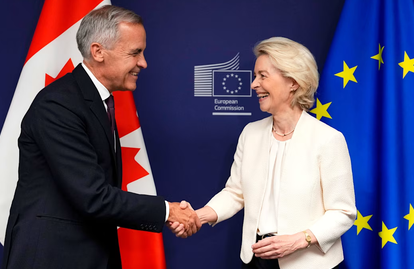

OTTAWA -- Canada stands at a critical geopolitical crossroads, but in its rush to diversify away from its traditional dependencies, Ottawa risks repeating the fundamental mistakes of its past. For decades, Canada’s foreign and economic policies have been comfortably anchored to its southern neighbour, the United States. However, growing political volatility in Washington, escalating tariff wars, and the constant threat of American protectionism have pushed Canadian lawmakers to search frantically for an economic counterweight. Increasingly, European Union officials have stepped into the spotlight, presenting Brussels as the ultimate, values-based alternative. Following a series of highly publicized diplomatic overtures—culminating in discussions of a "unique alliance" and a potential "associate membership" within the European bloc—Ottawa seems eager to leap into this new relationship. But as Canada contemplates deepening its integration with Europe through resource partnerships, it must tread carefully. Canada should not ditch one colonial master simply to find another.
The Historical Irony of the New Atlanticism
The historical irony of Canada’s current diplomatic pivot is stark. Canada spent the better part of two centuries gradually untangling itself from the colonial administrative grip of the British Empire, a long journey toward self-determination that required patience, constitutional grit, and an evolving sense of national identity. Yet, upon securing that autonomy, the nation quickly fell into a deeply asymmetrical economic dependence on the United States, effectively exchanging an overseas imperial master for a continental hegemon.
Now, under the modern banner of "friend-shoring," securing Western supply chains, and building a "protective canopy," Ottawa is being wooed by a different kind of imperial architecture: the bureaucratic monolith of Brussels. In the wake of aggressive posturing by U.S. President Donald Trump—who has targeted Canadian exports with sweeping tariffs and even flippantly floated maps annexing the country—the temptation to flee toward Europe is understandable. European Commission President Ursula von der Leyen’s offer to "open the door" for Canada to become the EU's first associate member is being treated in Ottawa as a lifeline.
However, this public, ardent love-in masks a deeper systemic threat. While the European Union does not wield gunboats or threaten crude military annexation, it excels at a more subtle, insidious form of dominance: regulatory imperialism. Brussels operates as a global superpower through what sociologists and economists call the "Brussels Effect"—the phenomenon where EU rules, standards, and environmental mandates are embedded so deeply into trade agreements that they effectively become global law. By tying its economic future too tightly to the EU’s regulatory framework, Canada risks sacrificing its legislative sovereignty. Canadian industries, from agriculture to manufacturing, will increasingly be forced to comply with European standards designed by and for Europeans, with little regard for the unique geographical, economic, or cultural realities of the Canadian landscape or its Indigenous communities.
The Mirage of "Nation Building" and the Asset-Stripping Reality
This passive subservience is perfectly captured by Prime Minister Mark Carney’s repeated economic mantra: "Canada has what the world wants." Delivered before global asset managers and foreign dignitaries, this rhetoric treats Canada not as an emerging, self-reliant superpower, but as a compliance-driven resource colony. It frames our nation as a vast open-pit mine, a convenient carbon sink, and a timber yard for foreign powers to exploit, so long as the buyer is a polished diplomat from Brussels rather than an unpredictable leader in Washington.
Carney and his allies champion this influx of global capital as "nation building," proposing a massive push to catalyze $1 trillion in investment over the next five years. But a sober look at the mechanics of this plan reveals it is precisely the opposite of nation building; it is a blueprint for asset stripping. By parading over 160 domestic projects—ranging from pipelines and data centres to critical mineral fields—in front of foreign financiers representing $120 trillion in assets, the government is treating the country like a fire sale.
Canada must not be viewed as an unpeopled wilderness full of trees just waiting for Europeans to chop them down, leaving Canadians with nothing but dirt, stumps, and toxic tailings. The colonial economic model is predictable: the colony exports raw, unrefined resources to power the industrial dominance of the metropole, while importing high-value finished goods back from them. If Canada ships its lithium, nickel, and cobalt across the ocean to power Germany's automotive plants or France's aerospace sectors, only to buy back the finished electric vehicles and tech infrastructure, it remains trapped in a state of arrested development. This structure does absolutely nothing to build long-term, high-tech industrial capacity or economic complexity within Canada itself.
Environmental De-regulation: Learning from Global Catastrophes
Perhaps the most alarming dimension of this current economic strategy is the proposed suspension and streamlining of environmental standards. Under pressure to provide "predictability" to foreign investors, the federal government has touted a major push to compress project review timelines down to a single year, utilizing tools like the Major Projects Office to fast-track massive extraction operations. This reckless desire to cut "red tape" to appease European green energy demands is a dangerous paradox: we are being asked to destroy our own environment to help Europe meet its climate targets.
This approach mirrors the exact type of unbridled, rapid industrialization that resulted in severe environmental catastrophes in China during the late 20th and early 21st centuries. In its desperate bid to become the world’s factory, Beijing systematically suspended ecological safeguards, fast-tracked mega-projects, and ignored local community protests. The result was a catastrophic ecological reckoning:
- Widespread Contamination: Toxic industrial runoff permanently poisoned major river systems, including sections of the Yangtze and Yellow Rivers.
- Depleted Drinking Supplies: Decades of unmonitored dumping left a significant percentage of the country's groundwater entirely unfit for human consumption or agricultural use.
- Irreversible Ecological Ruin: Fertile agricultural lands were transformed into barren, heavy-metal-laced toxic zones, displacing millions of rural citizens.
To replicate even a fraction of this destructive model in Canada, under the guise of "Western alignment" or "global responsibility," is an act of historical blindness. If Canada guts its impact assessment acts and bypasses meaningful Indigenous consultation to quickly ship hydrogen or critical minerals to the EU, we will be left holding the environmental bill. Long after the European corporations have extracted what they need and left, Canadians will be the ones living with contaminated watersheds, destroyed boreal forests, and depleted ecosystems.
Breaking the Cycle of Geopolitical Fear
Canadians need to wake up fast. Our deeply ingrained, historically justified fears of U.S. economic annexation and political volatility cannot be allowed to cloud our strategic judgment on global trade. For too long, Canadian foreign policy has been reactionary, swinging like a pendulum based on who occupies the White House. When Washington threatens tariffs, Ottawa panics and flings itself into the arms of European negotiators, accepting unfavourable terms out of a sense of desperation.
This is a failure of imagination and a symptom of a deeply rooted colonial mindset. Canada ought not be for sale to absolutely anyone—whether it is a transactional, protectionist administration in Washington or former European colonizers looking to outsource their environmental footprints and secure cheap raw inputs. Fear is a poor foundation for statecraft. If we allow our anxiety over American protectionism to dictate our trade policy, we will continually find ourselves signing away our sovereignty to the next smooth-talking suitor who promises us shelter from the storm.
The Path to an Autonomous Economic Superpower
True sovereignty for Canada does not lie in trading a reliance on Washington for a regulatory submission to Brussels. Canada must engage with the European Union, but it must do so strictly on its own terms—as a fully autonomous power with the explicit aim to rapidly develop into an independent economic superpower.
To achieve this, Ottawa must fundamentally overhaul its approach to national development:
- Enforce Domestic Value Retention: We must mandate that resources extracted from Canadian soil are refined, processed, and manufactured into finished products within Canadian borders. If a foreign power wants our critical minerals, they must invest in building the processing plants and factories here, creating high-wage jobs for Canadian workers and keeping the wealth within our communities.
- Assert Absolute Resource Control: Canada must maintain unshakeable jurisdiction over the pacing, pricing, and distribution of its assets. Strategic resources should be developed to serve the long-term domestic needs of Canadians first, powering our own transition to a high-tech, low-carbon economy, rather than being treated as liquid assets to be auctioned off to stabilize foreign markets.
- Cultivate Multilateral Diversity: Instead of shifting our gaze exclusively from one side of the Atlantic to the other, Canada must build robust, independent partnerships across the Indo-Pacific, Latin America, and Africa. True geopolitical resilience is found in a diverse web of bilateral relationships where no single trading bloc holds the leverage to dictate Canadian domestic policy.
The time has come for Ottawa to break the cycle of dependency once and for all. Canadians must demand an economic strategy that respects the intrinsic value of our land, safeguards our pristine environment, and builds genuine industrial strength at home. Canada’s future must be decided in Ottawa—not in Washington, and certainly not in Brussels.

Comments
There are 0 comments on this post