
Cooling the Concrete: How Toronto is Combating the Urban Heat Island Effect
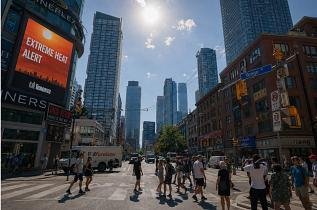
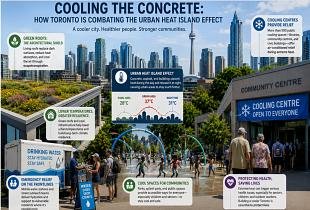


With the hot summer weather in southern Ontario, the city's towering glass buildings and endless pavement are heating up the city of Toronto. Pocketed relief is welcome under the old growth canopy in the leafy suburbs, whereas the dense urban areas of the Financial District, Chinatown and St. James Town are baking under the effect of the urban heat island.
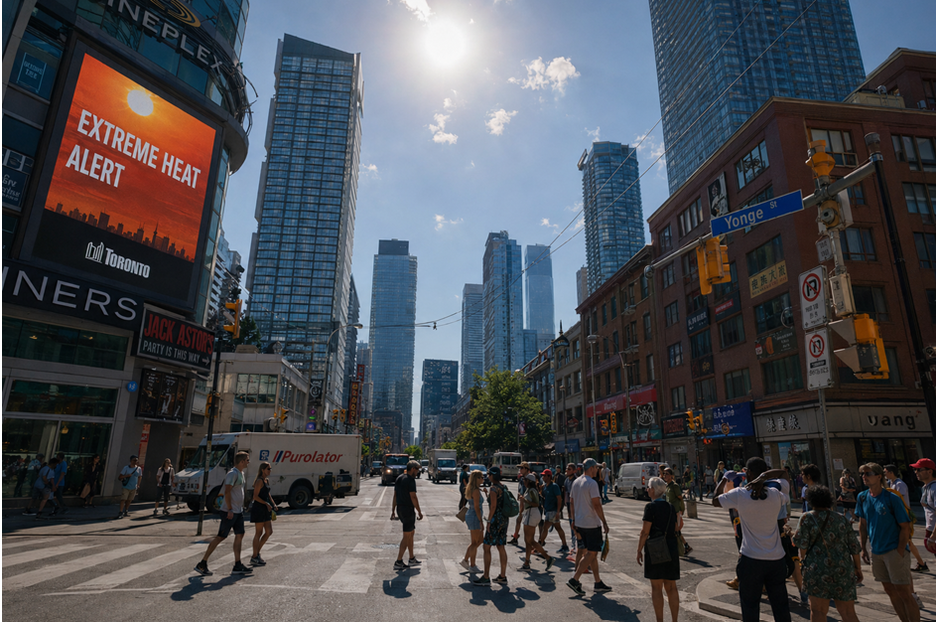
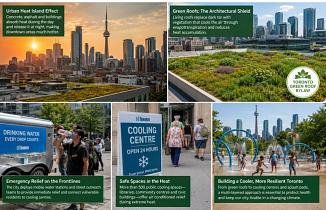
In such areas, large amounts of grey infrastructure are exposed such as asphalt, concrete or steel and absorb solar radiation by day and slowly release it by night. What happens is that the climate is dangerously hot even after the sun sets, creating a local climate that is endangering human life. The city of Toronto is under extreme time pressure to implement a mix of architectural solutions and neighbourhood emergency networks as climate change modelling suggests Toronto will see more, longer and hotter extreme heat events in the future. The mission is straightforward: end the cycle of heat trapping and save the city's most at-risk communities from a silent killer.
The Architectural Shield
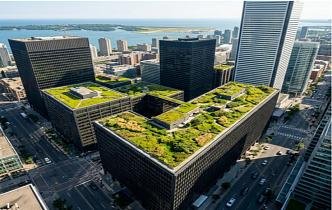
To fundamentally cool the urban core, urban planners are looking upward. The built-up area of rooftops accounts for about 21 per cent of the city of Toronto's total land area, and is an enormous black, heat absorbing area. For more than fifteen years the city has been leading the way in providing solutions with its ground-breaking Toronto Green Roof Bylaw that requires living vegetation blankets on new commercial and high density residential projects greater than 2,000 square metres.
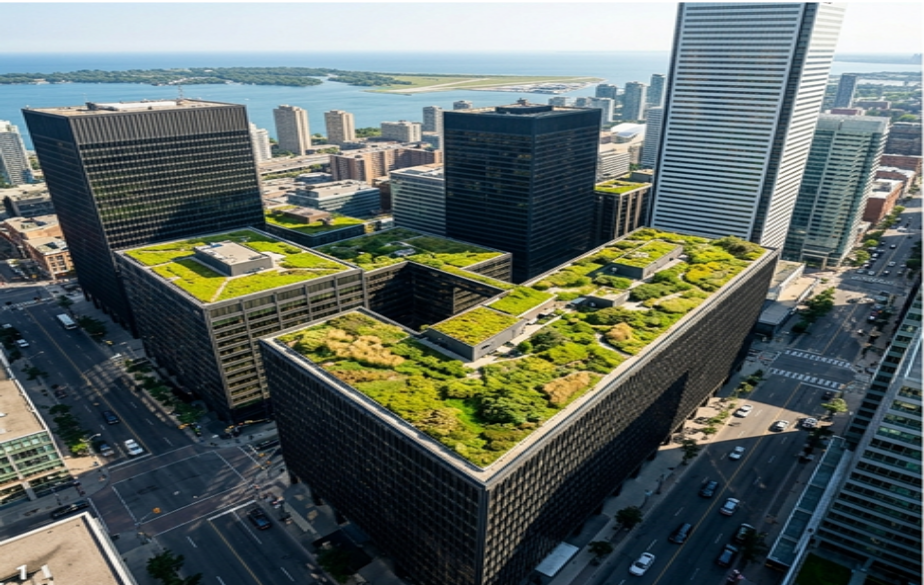
The living installations completely defuse the heat that can accumulate on the roofs by replacing the dark tar with soil and vegetation that will naturally cool the surrounding air through a process called "evapotranspiration." Despite some recent rollback of municipal mandates by the provincial legislature, the city has continued to support its Eco Roof Incentive Program for property owners upgrading existing buildings with green roofs and cool roofs. These engineering efforts are essential in the structure cooling for the hundreds of thousands of people that reside in high rise buildings. It's no longer an option, says Dr. Blair Feltmate, an extreme weather expert and Head of the Intact Centre on Climate Adaptation at the University of Waterloo.
Dr. Feltmate says the need for cooling should be considered the right to a basic need: "If we don't provide cooling people are going to die, Canadians are going to die, not in the hundreds, but in the thousands. He mentions that about half a million people live in the Greater Toronto area in high-rise apartment buildings that do not have modern central air conditioning systems and are therefore vulnerable if the power went down for an extended time”.
The Humanitarian Effort on the Frontlines
Humanitarian response on the frontlines. Immediate community interventions are needed when the humidex values exceed forty, whereas architectural changes can change the thermal profile of the city on a long time scale. In response, under its comprehensive Heat Relief Strategy, Toronto puts into place a network of over five hundred public cooling areas, providing longer operating hours at air conditioning libraries, community centres and civic offices.
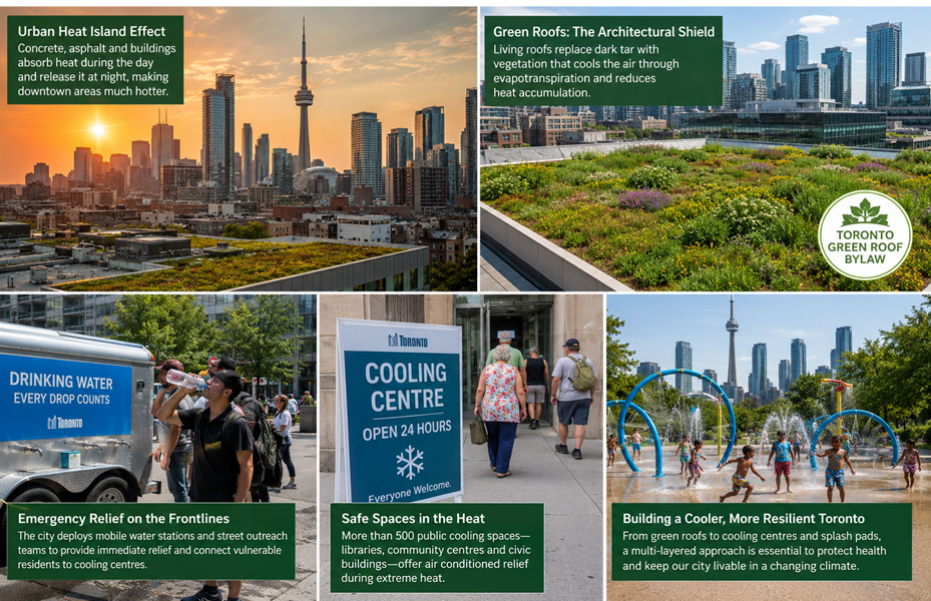
Meanwhile, the city is implementing mobile drinking water trailers in high-traffic downtown plazas, and expanding the city's street outreach teams. Streets to Homes teams spread out throughout the downtown core and try to direct the homeless to specific 24-hour emergency cooling centres, including the large location at Spadina Road. But advocates in the local community believe that the widespread municipal networks do not necessarily align with the more immediate and practical needs of marginalised community residents who would not be able to travel to other parts of the community or to public facilities.
There are numerous challenges that the unhoused community experiences during severe weather alerts," says Lorraine Lam of the Shelter and Justice Network, "They are not going to the swimming pool to cool down. She stresses that public recreational assets are often socially gate kept. Also, what if an unhoused person showed up at a splash pad, what would the frenzy be? We can only assume that is not possible, rather than knowing for sure. Lam also notes that the city needs to have better direct communication to ensure vulnerable people can get to cooler areas without being deterred or blocked by financial barriers, while also reviving past efforts on transit equity. An integrated approach to resilience”.
A Multi-layered Resilience Model
The medical fact of extreme heat is that it's a powerful magnifier of health. The public health information shows that extended heat exposure dramatically increases cardiac events, respiratory problems and heat stroke especially for isolated seniors, children and for people working outside
"High temperatures can increase premature deaths, cause heat stroke, and can aggravate heart disease and respiratory diseases," explains Kim Perrotta, Senior Director of Health and Policy for the Canadian Association of Physicians for the Environment. She underscores that extreme heat is an acute medical emergency rather than a mere seasonal inconvenience, noting that when extended heat waves strike large cities, a substantial portion of the population can suddenly find themselves biologically vulnerable.
"Kim Perrotta, Canadian Association of Physicians for the Environment's Senior Director of Health and Policy, says that in addition to the risks for premature death, heat can trigger heat stroke, exacerbate heart and respiratory disease. When extreme heat waves hit big cities, she points out, a significant population can suddenly be “biologically vulnerable” because of the heat, and it's an acute medical emergency, not a seasonal inconvenience”.
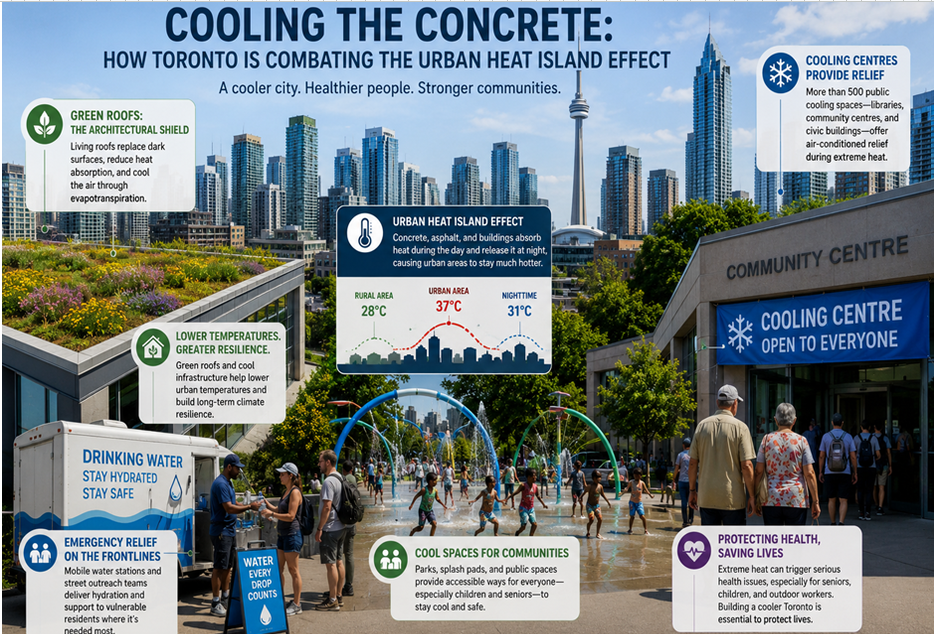
The city's future is uncertain due to various climate change patterns and an integrated plan for resilience is the only way forward. There's no single answer to Toronto's problems. It needs the passive cooling effects and benefits of green roofs to reduce background urban temperatures, the urgent safety defence of easily-accessed public cooling centres, as well as the creation of additional local-level water infrastructure such as splash pads and filling stations. Whether Canada's biggest city will be a viable place to live in the hot summer of the future will depend on how it manages to balance modern urban densification with a radical climate adaptation policy.

Comments
There are 0 comments on this post