
The China Blueprint: Hard Power, Sovereignty, and the Realist Path to CUSMA Renewal
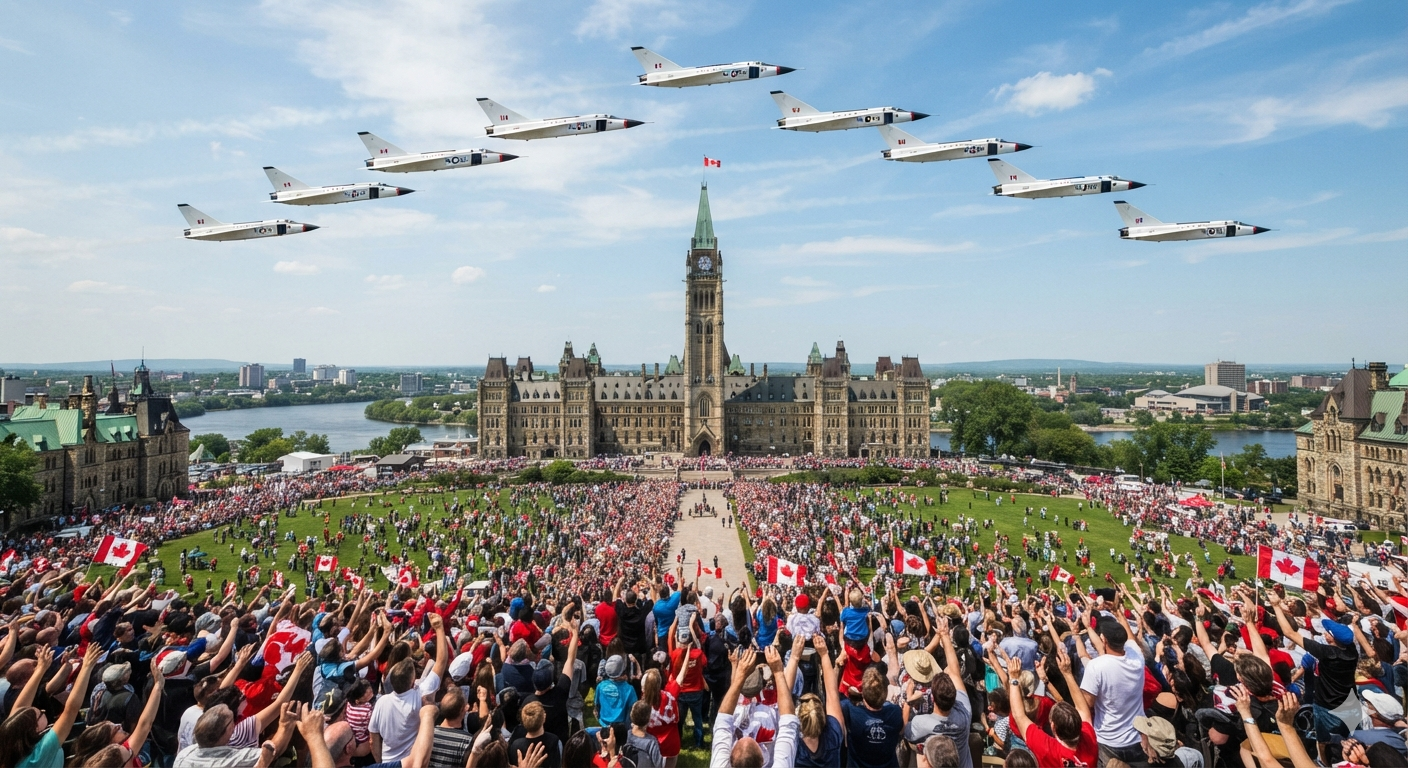

OTTAWA — For more than half a century, the architectural foundation of Canadian foreign policy has rested upon a comforting, if increasingly untenable, premise: that geography is destiny, and that destiny is inherently benign [CUSMA]. Shielded by three oceans and anchored by the world’s longest undefended border, Ottawa has long treated national security as an inherited asset rather than a primary state function requiring continuous, rigorous investment. We have operated under the assumption that our continental relationship is permanently governed by shared democratic values, institutional precedent, and the predictable enforcement of middle-power diplomacy.
The impending review milestone of the Canada-United States-Mexico Agreement (CUSMA) has definitively shattered this paradigm [CUSMA]. The decision by the United States administration to forgo an automatic 16-year extension, opting instead to trap Canada in a destabilizing cycle of rolling annual reviews, is not a routine trade skirmish or a minor bureaucratic impasse [CUSMA]. It represents a structural, calculated economic siege designed to systematically erode Canadian regulatory autonomy and compromise our sovereign decision-making.
In this altered geopolitical landscape, the traditional tools of Canadian statecraft—polite diplomatic entreaties, industry-led lobbying campaigns in Washington, and defensive regulatory concessions—are no longer sufficient. If Canada is to secure a long-term renewal of CUSMA on terms that preserve our national interest, Ottawa must undergo a profound psychological shift. We must look across the Pacific to analyze how other middle and regional powers navigate asymmetric pressures from an aggressive, transactional American administration.
Beijing has provided the international community with a masterclass in modern geopolitical realism. The lesson is as stark as it is undeniable: the current political coalition driving American foreign policy does not make concessions based on historical sentiment, shared democratic institutions, or international legal norms. It operates strictly on the calculus of transaction and leverage, reacting only to raw economic and military power.
Canada is no longer dealing with a conventional, predictable ally. We are confronting a Washington establishment whose inner circle openly flirts with continental realignment, raises questions regarding the sovereignty of the Arctic and Greenland, and actively exploits internal Canadian fractures, including western regional alienation. To remain a vulnerable, under-defended target while expecting anything other than strategic coercion from such an administration is a form of state-level negligence. If Canada wishes to protect its constitutional integrity and preserve its economic future, it must transform itself into an intellectually and physically indigestible prospect for foreign overreach. The domestic political and military cost of fracturing Canadian sovereignty must be made prohibitively high.
Beyond the Horizon: Weaponizing the Carney Doctrine
For the past several years, the policy framework articulated by the Mark Carney administration has served as a subject of vigorous debate within academic and policy institutes. Characterized by its emphasis on institutional resilience, supply-chain repatriation, and a re-engineered domestic industrial base, the Carney vision was initially presented as a long-term roadmap for a mid-century Canada. However, under the immediate pressure of a continental trade crisis, this vision can no longer be treated as a futuristic policy aspiration or an incremental legislative agenda. It must be rapidly converted into active, immediate government policy.
Economic resilience is entirely hollow if the state lacks the hard power capabilities required to defend its critical infrastructure, maritime approaches, and trade corridors. Ottawa must immediately enact sweeping federal mandates to align our industrial and manufacturing capacity with a comprehensive national defense strategy. This requires a rapid, unprecedented overhaul of the Canadian Armed Forces (CAF), shifting its mandate from auxiliary peacekeeping and minor coalition contributions toward a robust, highly advanced continental deterrent capability.
Canada’s historic approach to defense procurement—characterized by multi-decade delays, partisan litigation, and systemic bureaucratic inertia—is a luxury of a more stable global order. The modernization of the CAF must be immediate, capital-intensive, and structurally aggressive. Canada must field naval, aerial, and cyber capabilities capable of projecting undeniable authority over our sovereign territory. We must signal to international observers that Canada is not a strategic vacuum to be managed or exploited, but a heavily fortified, highly integrated state prepared to defend its economic boundaries with absolute resolve.
Nationalizing NORAD and Reclaiming the Military Consciousness
A critical element of this defensive awakening must be the structural dismantling of the unified command structure of the North American Aerospace Defense Command (NORAD) within Canadian territory. For decades, the integrated nature of NORAD has obscured the boundary between Canadian national interest and American global strategy. At a time when our very sovereignty is being threatened by political forces in Washington, a integrated military structure fundamentally undermines the independent national consciousness required within our officer corps and armed forces.
Under this plan, Canada will nationalize NORAD operations within its borders. NORAD will be completely remodeled as a cooperative framework between two entirely independent militaries, mirroring the standard operational blueprints of almost every successful military alliance in the world.
By separating the command structures, Canada ensures that Canadian aerospace defense is directed exclusively by Ottawa, free from the institutional inertia and cross-border political pressure that currently dilutes our strategic autonomy. This nationalization forces our military leadership to think purely in terms of sovereign defense, forging an independent institutional consciousness that is indispensable for resisting external coercion.
To support this newly independent airspace architecture, Canada must pivot its aerial procurement strategy toward platforms that offer total technological sovereignty. The immediate acquisition and domestic manufacturing of Saab Gripen multi-role fighter jets serves as a cornerstone of this plan. Unlike American-controlled platforms that come shackled with restrictive software locks and foreign-managed supply chains, the Saab Gripen is specifically engineered for high-tempo, distributed operations in harsh, sub-Arctic conditions.
The Gripen can be serviced by civilian crews on unimproved runways or highways, perfectly aligning with the mobilization capabilities of our domestic civilian infrastructure. Most critically, the procurement framework allows for full technology transfer, ensuring that the software source codes and modifications remain entirely under Canadian control, providing a lethal, uncorrupted aerial shield over our nationalized airspace corridors.
The Architecture of the Royal Canadian National Defence
A nationalized airspace, however, constitutes only the first line of defense. To structurally alter the strategic calculus in Washington, Canada must fundamentally re-engineer its national security architecture. This transformation requires the establishment of a unified, comprehensive security matrix: the Royal Canadian National Defence (RCND).
Under this new institutional framework, Canada must look beyond its traditional, contract-based reliance on the North Atlantic Treaty Organization (NATO). While NATO remains an indispensable pillar of Euro-Atlantic security, its decision-making mechanisms are increasingly vulnerable to American domestic political volatility and institutional paralysis. To counter immediate, localized pressures on continental trade and border integrity, Canada must cultivate a secondary, parallel network of strategic relationships.
Ottawa must aggressively leverage its unique, institutionalized global networks—specifically the Commonwealth and the Francophonie. These organizations are far more than historical artifacts or cultural forums; they represent a vast, multi-continental assembly of sovereign nations that possess a shared interest in upholding a rules-based international order and resisting unilateral economic coercion. Canada must immediately initiate a series of dense, bilateral security and defense training pacts with key partners within these alignments.
The immediate domestic objective of this global network will be the rapid mobilization, training, and deployment of a 300,000-strong Civilian Peace Corps. This body will not function as a passive civic organization, but as a disciplined, state-directed civil defense and domestic resistance structure. Recruited from Canada’s highly educated, multicultural populace, this corps will ensure that every critical infrastructure node, energy corridor, and transport link possesses a dedicated, highly trained cadre of citizens capable of maintaining operational continuity under external duress.
By organizing our society on this scale, Canada transforms its greatest domestic attribute—its deep social cohesion and multicultural plurality—into a core strategic asset. A nation of 40 million citizens backed by a highly disciplined, 300,000-person active civil defense structure becomes fundamentally resilient against foreign political manipulation, cyber subversion, or economic blackmail. It signals to the world that Canadian communities cannot be fractured or coerced without incurring an asymmetric social and economic cost that no foreign administration could ever justify to its own populace.
The Legal Architecture of Parallel Security Treaties
To construct this secondary security network within the Commonwealth and the Francophonie without violating Canada’s existing treaty commitments, Ottawa must utilize specific, recognized instruments of international law. This framework cannot mimic the collective defense mechanisms of Article 5 of the North Atlantic Treaty, which binds signatories to automatic military intervention. Instead, Canada must look to the legal architecture of bilateral Visiting Forces Acts, Status of Forces Agreements (SOFAs), and non-aggression security assistance pacts.
Under the United Nations Charter (Article 51), sovereign states possess an inherent right to individual or collective self-defense. Canada can legally structure these agreements as "Bilateral Training and Sovereignty Protection Treaties." They do not require a centralized command structure like NATO. Rather, they operate under the legal concept of Host Nation Command, a framework thoroughly recognized under international humanitarian law and the Geneva Conventions.
- The Visiting Forces Framework: Immediate, aggressive legislative updates to Canada’s Visiting Forces Act are mandatory. This legislative mechanism is vital to enable the rapid, immediate expansion of Canadian military capabilities on the ground. By expanding these bilateral statutory designations to key Commonwealth partners (such as Australia, the United Kingdom, and India) and Francophonie allies (such as France and Belgium), Ottawa can legally host and integrate foreign troops on Canadian soil tomorrow. This rapid influx allows Canada to present a completely new, unyielding face to Donald Trump and his inner circle—a visible transformation necessary to secure the fundamental respect that this administration reserves exclusively for nations that command hard power.
- Status of Forces Agreements (SOFAs): Each bilateral treaty will feature a uniquely tailored SOFA specifying that all foreign personnel operate strictly under the regulatory, civil, and criminal jurisdiction of the Canadian Armed Forces (CAF) military justice system while deployed in Canada. This prevents any infringement on Canadian domestic law or constitutional supremacy.
- Geographic and Operational Bounds: The treaties will explicitly define the operational boundaries of the transition force. Foreign troops are restricted to defensive training, Arctic sovereignty patrols, and critical infrastructure protection. They are legally barred from taking part in domestic law enforcement or border control, which remain the sole purview of Canadian civil authorities.
This legal arrangement allows Canada to rapidly scale up its visible defense presence. It bypasses the institutional paralysis of broader multilateral bodies while remaining fully compliant with international law.
The Allied Boot Pact: Managing the Security Transition
The construction of the Royal Canadian National Defence and the mobilization of a 300,000-strong Civilian Peace Corps cannot be achieved instantaneously. It requires an operational runway of several years to recruit personnel, establish command structures, and integrate new technological assets. During this delicate transitional window, Canada cannot afford to project vulnerability.
To bridge this strategic gap and secure our sovereign perimeter, Canada must implement a temporary, highly visible "Allied Boot Pact," enabled entirely by the expanded Visiting Forces Act. Ottawa must formally invite military contingents from trusted Commonwealth, Francophonie, and non-U.S. NATO partners to conduct sustained, collaborative operations on Canadian soil.
Crucially, this arrangement must strictly preserve Canada’s constitutional autonomy. All foreign forces operating within our borders will do so under the explicit regulatory and operational umbrella of the Canadian Armed Forces. They will serve strictly as a transitional shielding mechanism, providing tactical coverage while Canada builds out its long-term domestic security infrastructure.
These allied detachments must be deployed prominently and strategically across the country. They must be stationed near our primary economic centers, alongside critical digital infrastructure, and across the vast, resource-dense expanses of the Canadian Arctic.
The Arctic has emerged as the definitive frontline of geopolitical competition. Recent rhetorical maneuvers out of Washington concerning Greenland and maritime transit rights demonstrate that the American policy apparatus views the North as a resource-rich frontier vulnerable to unilateral commercial and military expansion. By placing an international coalition of allied forces directly along our northern corridors, Canada effectively internationalizes the defense of the Arctic. It transforms any potential unilateral encroachment into a multi-national crisis, forcing Washington to recognize that an infringement on Canadian territory is a confrontation with a broad, global alliance of sovereign states.
This coalition presence instantly alters the international perception of Canada. It dismantles the narrative that Canada is an isolated middle power that can be easily bullied during trade negotiations or politically destabilized through foreign interference in our western provinces. It projects the image of an ascending, resilient state—one capable of leveraging its immense natural wealth, diplomatic networks, and societal unity to safeguard its geopolitical independence.
Financing the RCND Architecture Without Fiscal Crisis
Expanding Canada's defensive capabilities to sustain a 300,000-strong Civilian Peace Corps and an overhauled conventional military requires a massive mobilization of capital. To fund the Royal Canadian National Defence (RCND) infrastructure without triggering a sovereign debt crisis, triggering hyperinflation, or crippling the domestic economy, Canada must reject simple deficit spending. Instead, it must adopt a structural "Defense Capitalization Model."
Canada currently spends roughly $30 billion annually on defense, representing approximately 1.3% of its Gross Democratic Product (GDP). To fund the RCND infrastructure, Canada must aggressively scale this expenditure to 3.5% of GDP over a four-year transitional period. This requires moving from $30 billion to $85 billion annually, creating a funding gap of $55 billion per year.
This $55 billion annual funding gap will be financed through a two-pronged economic model that preserves fiscal stability:
1. The Sovereign Wealth Shift ($25 Billion Annually)
- Resource Revenue Redirection: The federal government will mandate that a fixed percentage of revenues derived from oil, natural gas, critical minerals, and Arctic maritime transit fees be redirected directly into a dedicated National Security Infrastructure Fund.
- Institutional Fund Mandates: Domestic institutional capital—specifically the Canada Pension Plan (CPP) and major public sector pension funds—will face revised regulatory requirements. They will be mandated to hold a minimum percentage of their portfolios in high-yielding, state-backed Canadian defense infrastructure assets, shifting investment away from foreign real estate and equities back into the domestic economy.
2. Sovereign Defense Bonds and Dual-Use Industrial Strategy ($30 Billion Annually)
- Capital Asset Issuance: The remaining $30 billion will be raised through the issuance of long-term, inflation-protected Sovereign Defense Bonds. These bonds are explicitly separate from general operational deficit spending. Under strict fiscal rules, bond revenue cannot be used for military payrolls or routine administration. It is legally locked into capital procurement and domestic industrial capacity.
- The Dual-Use Multiplier Effect: This capital injection acts as an economic multiplier. Instead of buying foreign military hardware, the funds are legally tied to domestic manufacturing contracts. This will build high-tech, dual-use industrial sectors within Canada, focusing on shipbuilding, aerospace engineering (including the Saab Gripen assembly lines), automated drone manufacturing, and advanced cyber security infrastructure.
Regional Modernization and Industrial Employment Corridors
To prevent supply-chain vulnerabilities and distribute the economic benefits equitably across the federation, the infrastructure funding for the RCND will be targeted at specific, existing industrial clusters. Rather than building entirely new factories, federal procurement contracts will focus on upgrading and retooling existing heavy manufacturing, aerospace, software, and automotive infrastructure into high-output, dual-use facilities.
Crucially, this structural pivot serves as a generational economic and training catalyst, projected to create over 185,000 highly unionized, high-wage domestic manufacturing and engineering jobs while simultaneously establishing a comprehensive national training program in both civilian and military advanced technologies.
1. The Southern Ontario Automotive and Advanced Electronics Corridor (65,000 Jobs)
The manufacturing engine of Southwestern Ontario—spanning Windsor, London, Kitchener-Waterloo, and the Greater Toronto Area (GTA)—will serve as the primary assembly hub for tactical mobility and autonomous defense platforms.
- Retooling Automotive Lines: Traditional commercial automotive lines in Windsor and Oshawa will be augmented with dual-use contracts to assemble armored transport vehicles, modular supply trucks, and electric-hybrid tactical units.
- The Tech-Defense Integration: The Kitchener-Waterloo technology cluster will be integrated directly with the GTA's advanced electronics infrastructure. This sub-corridor will focus exclusively on military-grade cyber security software, autonomous drone piloting systems, secure satellite communication arrays, and battlefield artificial intelligence interfaces.
- The Training Blueprint: Ontario polytechnics and universities will receive federal grants to pioneer dual-use engineering curricula, cross-training auto-workers and software developers in threat-matrix programming and heavy-vehicle electrical engineering.
2. The Quebec Aerospace and Marine Systems Cluster (45,000 Jobs)
Quebec’s deeply established aerospace and heavy industrial infrastructure, concentrated primarily in the Greater Montreal Area, Mirabel, and the Saint-Lawrence Marine Corridor (Lévis/Trois-Rivières), will handle high-altitude and maritime defense systems.
- Aerospace Retooling: Facilities in Mirabel and Montreal will expand from civil aviation to establish the domestic production, assembly, and testing lines for the newly adopted Saab Gripen fighter jets, manufacturing advanced airframes and composite components.
- Maritime Systems: Shipyards and precision metal machining plants along the Saint-Lawrence will scale up production of marine engines, automated propulsion systems, and advanced hull plating for naval surface combatants, creating a contiguous engineering loop between Montreal and Quebec City.
- The Training Blueprint: A unified aerospace apprenticeship initiative will retrain civilian aircraft technicians in tactical airframe stress-testing, advanced avionics, and sovereign software management, equipping civilian aviation with high-tier structural engineering skills.
3. The Alberta Heavy Metallurgy and Unmanned Systems Network (30,000 Jobs)
Alberta’s industrial hubs in Edmonton, Calgary, and Medicine Hat will pivot their substantial engineering, metal fabrication, and drone-testing infrastructure toward defense logistics and heavy defensive metallurgy.
- Fabrication and Refineries: The Edmonton energy-services corridor will utilize its advanced heavy-metal fabrication shops to manufacture structural armoring, ballistic shielding, and high-strength alloy casings for transport and defensive assets.
- Unmanned Testing Enclaves: Calgary's aerospace and geomatics firms, combined with the vast testing ranges around Medicine Hat, will become Canada’s premier center for testing long-range, cold-weather unmanned aerial vehicles (UAVs) and automated terrestrial supply rovers designed for harsh geography.
- The Training Blueprint: Displaced oil-and-gas technicians, geometricians, and heavy-equipment welders will be cross-trained in high-yield robotic welding, smart-grid mechanics, and drone maintenance protocols, re-channeling resource sector talent into permanent defense manufacturing careers.
4. The Manitoba Logistical and Maintenance Hub (20,000 Jobs)
Centred in Winnipeg and the multi-modal transit corridors of Brandon, Manitoba will leverage its unique position as the geographic crossroads of the continent to anchor the RCND's supply chain and heavy maintenance infrastructure.
- Heavy Maintenance and Refitting: Winnipeg’s large-scale aerospace maintenance, repair, and overhaul (MRO) facilities will be scaled up to serve as the central western depot for refitting conventional military hardware, servicing transport fleets, and storing strategic reserves.
- Logistical Assembly: Local manufacturing plants will focus on cold-weather survival gear, modular tactical field shelters, and heavy-payload transport trailers capable of operating across unimproved northern infrastructure.
- The Training Blueprint: Federal funding will build state-of-the-art logistics and supply-chain command training centers in Winnipeg, training personnel in automated inventory management, cold-weather diesel engineering, and international freight law.
5. The Nova Scotia Naval Shipbuilding and Sonar Cluster (20,000 Jobs)
The maritime defense economy of Halifax and the Dartmouth industrial basin will expand its historic naval role into a continuous, high-rate production shipyard for sovereign coastal defense.
- Continuous Shipbuilding: Funding mandates will shift local yards from erratic, single-ship procurement cycles to a high-tempo, continuous manufacturing line for sub-Arctic patrol vessels, automated maritime surveillance submersibles, and modular frigates.
- Acoustic and Hydro-Telemetry: The specialized marine-technology firms in Dartmouth will expand production of advanced sonar arrays, undersea surveillance grids, and anti-submarine warfare tracking systems designed to secure the Atlantic and Arctic approaches.
- The Training Blueprint: Marine architecture programs across Atlantic Canada will be re-capitalized to dual-train shipwrights in maritime digital-twin simulation, naval acoustic isolation, and composite hull design applicable to both defense frigates and modern green shipping fleets.
6. The Yellowknife Strategic Northern Telemetry and Arctic Logistical Base (5,000 Jobs)
As the primary administrative and logistical gateway to the western Arctic, Yellowknife, Northwest Territories, will house the foundational communications, radar, and forward-operational infrastructure of the RCND.
- Northern Telemetry and Surveillance: Retooled facilities in and around Yellowknife will manufacture and maintain deep-cold radar stations, satellite ground-downlink stations, and automated permafrost-stable sensor arrays.
- Forward Deployment Logistics: Local engineering hubs will specialize in customizing conventional equipment for sub-zero survival, ensuring that fuel systems, lubricants, battery arrays, and structural alloys can function continuously at temperatures below minus forty degrees Celsius.
- The Training Blueprint: Working in close collaboration with Northern colleges and Indigenous-led development corporations, Yellowknife will anchor specialized environmental-engineering academies. Personnel will be rigorously trained in permafrost telemetry, cold-weather telecom grid resilience, and sub-zero hardware optimization—skills highly valuable to northern civilian infrastructure and emergency management.
By linking defense expansion directly to localized domestic industrial production and advanced dual-use technical training, the creation of the RCND avoids draining the treasury. Instead, it serves as a powerful economic catalyst. It injects high-wage manufacturing jobs directly into the Canadian workforce, driving non-inflationary productivity growth while building an unassailable sovereign deterrent.
A Realist Framework for Continental Trade
Predictably, critics within the traditional foreign policy establishment will characterize this hard-power pivot as an unnecessary provocation. They will argue that nationalizing NORAD, expanding our military capabilities via the Visiting Forces Act, and hosting foreign forces under Canadian command will alienate our largest trading partner, leading to the immediate termination of CUSMA and systemic economic isolation [CUSMA].
This argument stems from a fundamental misreading of the contemporary American political landscape.
Decades of diplomatic history demonstrate that appeasement is an entirely ineffective strategy when dealing with a transactional administration that views global commerce as a zero-sum conflict. Every defensive concession Canada has historically offered—whether regarding supply-managed agricultural markets, intellectual property frameworks, or digital service taxation—has failed to generate durable goodwill. Instead, it has routinely invited further tariffs, expanded demands, and renewed economic pressure.
The East Asian paradigm offers a far more instructive model for middle-power survival. Despite deep structural trade imbalances and intense geopolitical friction, Washington consistently approaches its heavily armed partners with a degree of cautious, calculated respect that it rarely extends to Ottawa. This respect is not a product of ideological alignment; it is a direct consequence of hard-power deterrence. When a state possesses the structural capacity to make a diplomatic or economic rupture prohibitively expensive, its negotiating position is fundamentally transformed.
When Canada projects an image of clear, calculated strategic cost, the entire dynamic of the CUSMA review changes [CUSMA]. The assumption that Ottawa has no choice but to capitulate to unilateral American mandates is removed from the equation. Once Washington looks north via an independent Canadian command and observes a state fortified by international security partnerships, backed by allied forces operating under domestic command, and fully mobilized down to its regional industrial sectors, the economic calculus shifts from coercion to stabilization.
Only when the American policy apparatus realizes that economic subversion or political intimidation will carry an intolerable structural cost will Canada be able to secure a stable, equitable renewal of CUSMA [CUSMA]. It is time for Canada to abandon the posture of a dependent trading entity and adopt the responsibilities of a sovereign nation prepared to defend its autonomy. Hard power is the primary currency of the contemporary international order. It is time for Ottawa to begin printing it.
The author is a researcher and consultant on international security.

Comments
There are 0 comments on this post