
The Gigabit Divide: High-Speed Internet Inequity in Toronto’s Community Housing
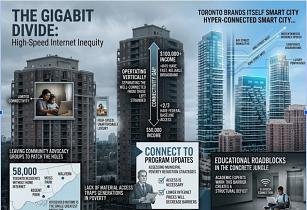
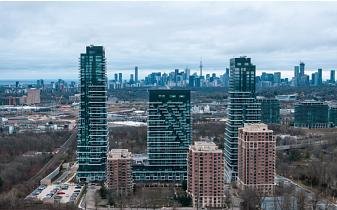

From the towering glass monoliths of Bay Street to the bustling tech incubators of King Street West, Toronto frequently brands itself as a premier, hyper-connected smart city. Miles of fibre optic cables run silently beneath the asphalt, pumping near-instantaneous gigabit internet speeds into corporate boardrooms and luxury penthouses alike.
Yet, step inside the concrete high-rises of Toronto Community Housing (TCH) complexes in neighbourhoods like Regent Park, Moss Park, or Malvern, and a completely different digital reality takes shape.
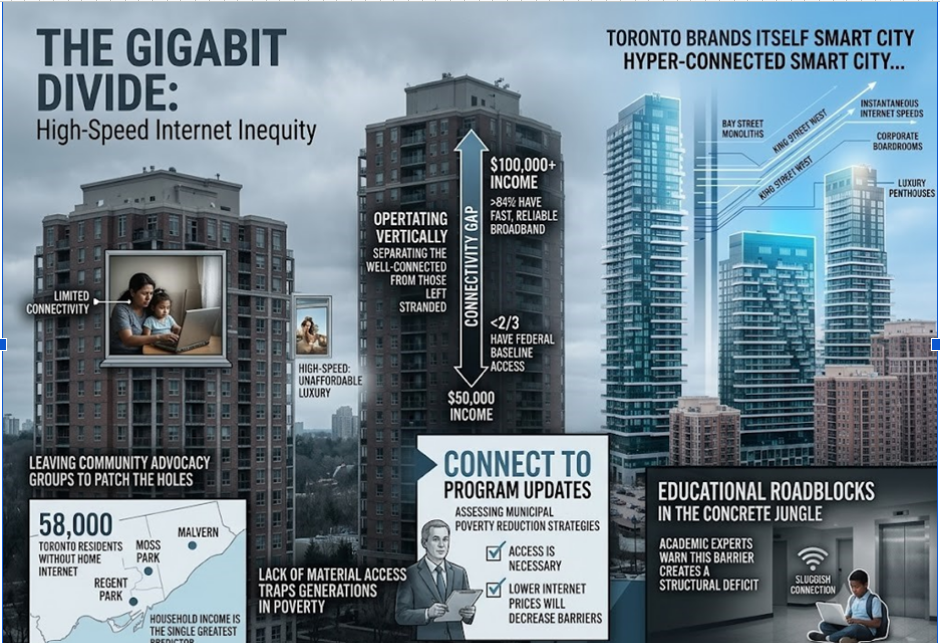
For thousands of low-income families living in these complexes, high-speed internet is not a given utility; it is an unaffordable luxury. As classrooms, job applications, and vital municipal services migrate permanently into the cloud, the city's stark wealth gap has manifested as a profound digital divide. Rather than existing across vast rural distances, this connectivity gap operates vertically separating the well-connected from those left stranded on the lower rungs of the economic ladder.
The Financial Cost of Exclusion
According to a comprehensive report on urban connectivity published by The Dais, a public policy institute at Toronto Metropolitan University, approximately 58,000 Toronto residents live completely without a home internet connection. The research explicitly identifies household income as the single greatest predictor of connectivity. While over 84% of households earning more than $100,000 enjoy fast, reliable broadband, less than two-thirds of households earning under $50,000 have access to speeds that meet federal baselines.
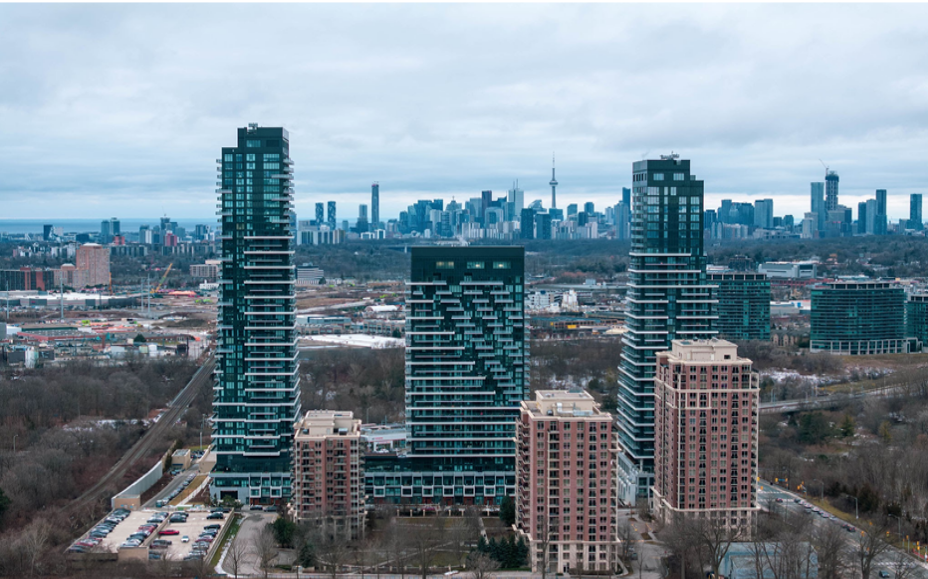
The physical proximity of Toronto's high density residential towers to the major economic and technological core.
For families residing in social housing, the barrier is almost exclusively financial. With the average cost of a standard home telecom package in Canada hovering over $100 per month, low-income earners are frequently forced to make impossible choices between paying for a reliable connection and buying groceries.
"The urban-rural lens hides the disparities that can exist at the local level," states Sam Andrey, Managing Director of The Dais and co-author of the landmark Toronto's Digital Divide study. "Instead of existing across geographic boundaries, the divide exists across socioeconomic boundaries, with some groups being significantly better connected than others."
This lack of material access yields compounding consequences. When a household cannot afford sufficient bandwidth, its members are effectively locked out of the modern economic engine.
Educational Roadblocks in the Concrete Jungle
The impacts of this inequity fall heavily on children and young adults trying to navigate the school system. While schools increasingly rely on digital portals, online textbooks, and web-based homework assignments, students in under-connected TCH homes are left to lag behind.
In smaller, low-income apartments where multiple family members must share a single sluggish connection or rely entirely on a limited mobile data plan, performing basic academic tasks becomes a daily logistical crisis. Students are frequently spotted sitting on the floors of apartment lobbies or outside local libraries after hours just to capture enough free Wi-Fi to submit their schoolwork. Academic experts warn that this barrier creates a structural deficit for marginalized youth that is incredibly difficult to overcome later in life.
"In my experience, the most powerful disruptors of systemic educational inequity include equipping learners with digital literacy skills and broadband access," says Rita Fennelly-Atkinson, a digital inclusion expert and Director of Micro-credentials at Digital Promise. Without these foundational tools, she notes, children from low-income backgrounds face an uphill battle from day one.
The long-term economic cost of this gap is steep. Research indicates that jobs requiring even basic digital skills pay significantly higher wages. By restricting access to broadband, the digital divide effectively traps the next generation of TCH residents in a cycle of poverty, cut off from remote employment opportunities.
The Myth of Universal Access
While federal initiatives like the Connecting Families program offer voluntary, discounted $20 a month packages through major internet service providers (ISPs), critics point out that these programs are strictly gated by bureaucratic hurdles. They require specific government invitation letters that many vulnerable residents never receive or understand how to process. Furthermore, the aging infrastructure within older TCH buildings often lacks the internal wiring necessary to deliver stable high-speed connections to individual units.
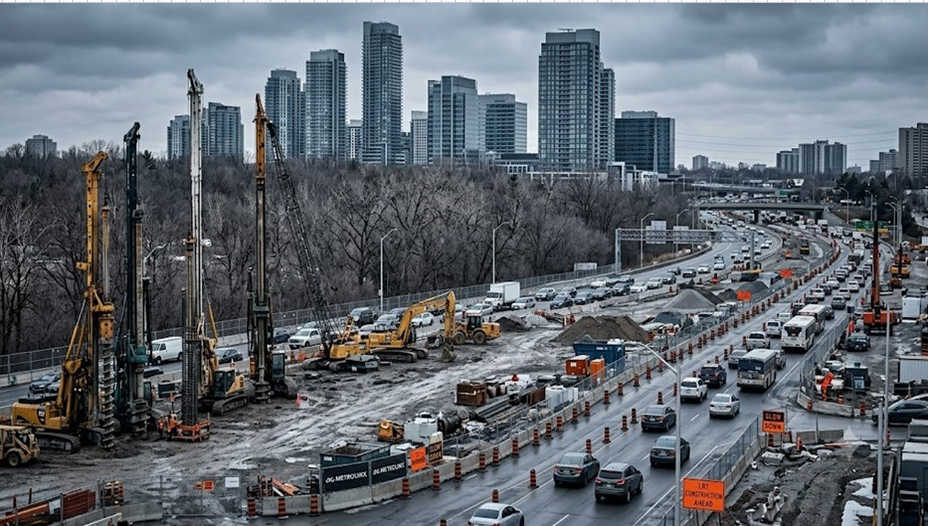
To address this systemic failure, the City of Toronto launched its Connect TO program, aiming to leverage city owned fibre assets to bring free or low-cost internet to priority neighbourhoods. However, implementation has faced delays, leaving community advocacy groups to patch the holes in the safety net.
"Access to affordable and reliable high-speed internet service is necessary for residents to equitably participate in day to day life," city staff noted in a recent Connect TO program update assessing municipal poverty reduction strategies. "Lower internet prices will decrease barriers, aid financial stability, and improve access to City services for equity-seeking groups."
Until high-speed broadband is treated as an essential public utility akin to water or electricity rather than a commercial commodity, Toronto’s gigabit divide will continue to widen. For the families watching the digital economy pass them by from the windows of public housing, the promises of Canada's premier tech capital remain entirely out of reach.

Comments
There are 0 comments on this post