
Conservative Party of Canada and operatives fall into line with Trump’s Department of Cognitive Advantage

In George Orwell’s Nineteen Eighty-Four, the Ministry of Truth existed for a single, totalizing purpose: to manufacture reality. Its bureaucrats rewrote history on the fly, invented convenient enemies, and demanded that citizens reject the evidence of their own eyes and ears in favour of state-approved orthodoxy. For decades, Orwell’s dystopia served as a literary warning against authoritarian statecraft. Today, however, that warning has found a remarkably literal bureaucratic home in Washington. With the creation of the National Security Council’s Cognitive Advantage portfolio—led by Shawn Chenoweth, America’s first Director of Cognitive Advantage—the U.S. government has formally institutionalized influence, psychological persuasion, and narrative shaping as core instruments of national power. Media observers and political analysts have not missed the chilling, Orwellian parallels of a state apparatus explicitly dedicated to managing perception and engineering "cognitive" outcomes across borders.
As Washington builds out and deploys this Orwellian Ministry of Truth across the forty-ninth parallel, the political fallout in Ottawa has become unmistakable. What we are witnessing on Parliament Hill—the ongoing, historic meltdown of the Conservative Party of Canada and its leadership—is not merely the result of tactical errors, bad messaging, or normal cyclical fatigue. Rather, it is the direct consequence of a deepening, fatal public conviction that the Conservative Party can no longer be trusted to defend Canadian sovereignty, having allowed itself to be hollowed out and commandeered by operatives echoing the talking points of Donald Trump’s new narrative machine.
To understand how a major Canadian political institution fell victim to this cognitive warfare, one must first examine how the White House’s influence machinery operates behind closed doors. Recent leaks from inside the American conservative media ecosystem offer a rare, unvarnished look at the playbook. Former Trump White House staffer and ex-OANN Pentagon correspondent Gabrielle Cuccia exposed internal documents detailing a covert influence campaign laundered through an organization called Vine and Fig Tree (VFT). According to Cuccia’s disclosures, VFT recruited her to write scripts for AI-generated videos on behalf of the administration, explicitly instructing her that White House officials "don't want it to look like it's actually coming from the WH [White House]". As detailed in Byline Supplement's investigation, the leaked files outlined a sophisticated, multi-tiered operation involving the deployment of burner social media accounts, synthetic AI-generated media, and the systematic laundering of administration talking points through ostensibly independent right-wing influencers to conceal the government’s hand.
Look across the Canadian digital landscape over the past year, and the exact same operational fingerprints are everywhere. A swarm of purportedly homegrown "Canadian" bloggers, podcasters, and YouTube commentators has flooded social media platforms with bizarrely uniform, heavily scripted content. Their output follows a rigid, unmistakable editorial formula: hysterical, outrageous diatribes attacking Prime Minister Mark Carney as an existential threat to freedom, paired seamlessly with syrupy, rose-coloured hagiographies of Donald Trump.
In the alternate reality constructed by these creators, Trump is portrayed not merely as a neighbouring head of state with whom Canada must negotiate, but as an infallible, messianic saviour—guilty of no wrong, immune to criticism, and offering economic and spiritual salvation to a supposedly broken Canada. The relentless, saccharine embellishment is so detached from Canadian political reality—and so eerily uniform in its phrasing, cadence, and grievance framing—that it reads far less like organic Canadian commentary and much more like paid copywriting handed down from a central message box in Washington. When dozens of supposedly independent commentators suddenly adopt the exact same talking points minimizing American tariffs, mocking Canadian democratic institutions, and portraying absorption into the United States as an act of liberation, the illusion of grassroots authenticity collapses.
We do not have to rely on intuition or textual analysis to know that bad-faith actors are manufacturing pro-annexation sentiment on YouTube; investigative journalism has already exposed the underlying machinery. A landmark CBC News investigation into YouTube "slopaganda" uncovered a coordinated network of twenty inauthentic channels that racked up roughly forty million views while posing as everyday Albertans pushing for provincial secession and U.S. annexation. Rather than passionate, homegrown patriots speaking from the heartland, the network was traced to offshore operators in the Netherlands who hired low-paid voice actors and freelance media workers to read deceptive, near-identical scripts laced with fabricated polling data. As documented in a comprehensive Media Ecosystem Observatory report and further detailed by CBC News Calgary, these faceless digital storefronts utilized AI-generated avatars, synthetic voiceovers, and repurposed news clips to manufacture the powerful illusion of a mass separatist movement.
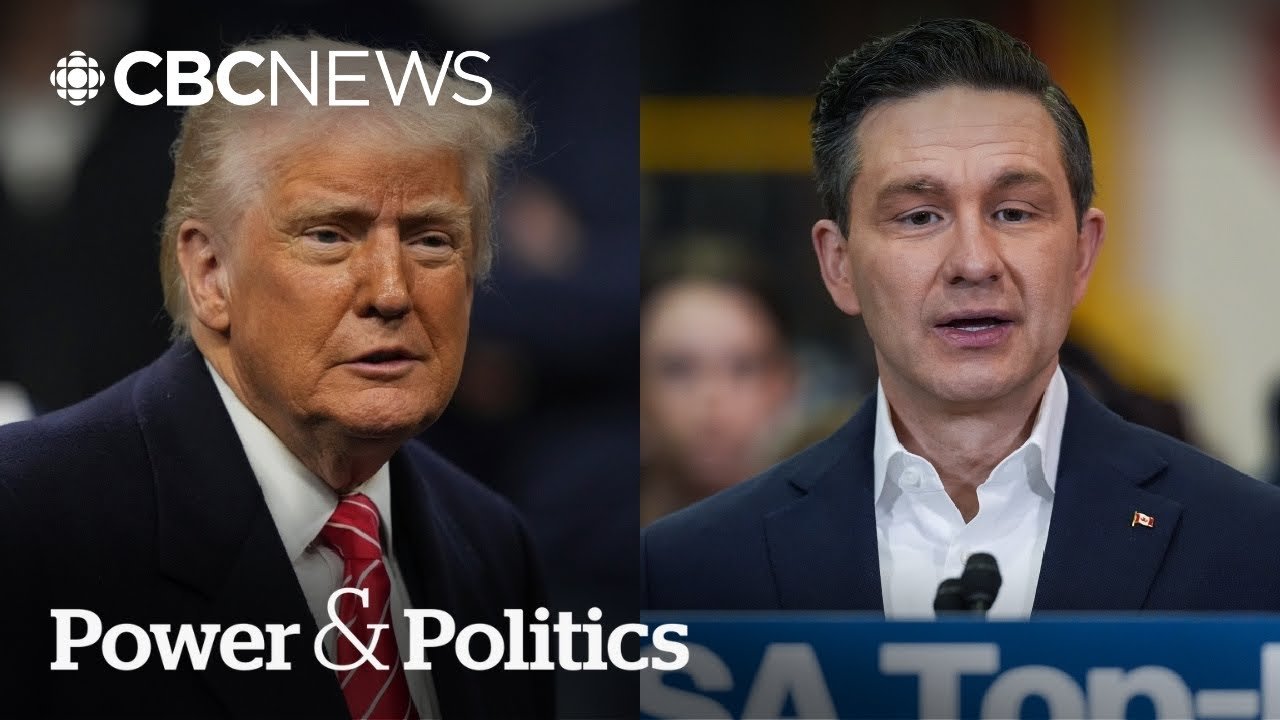
This brings us directly to the existential crisis now engulfing Pierre Poilievre and the federal Conservative Party. For months, pundits in Ottawa have tried to explain the party’s unravelling through the lens of conventional parliamentary politics. They point to Poilievre losing his own long-held seat in Carleton, the bleeding of eight sitting Members of Parliament to floor-crossings and abrupt departures, a stunning exodus of senior campaign staffers, and an open caucus rebellion that has left the leadership wounded and defensive. Yet viewing these events as isolated personnel failures misses the forest for the trees. Every one of these fractures stems from a single, foundational rot: a catastrophic loss of public trust regarding where the party’s ultimate loyalties lie.
In Canada, the federal electorate has historically forgiven a great many political sins, from economic missteps to personal unpopularity. What Canadian voters will never forgive, however, is ambiguity on national survival. The prime ministership is viewed first and foremost as the ultimate constitutional shield of Canadian independence. Yet as recent polling demonstrates, roughly one in three Conservative voters now hold explicitly pro-Trump views that sit drastically adrift of the Canadian mainstream. Inside the party’s digital echo chamber, the line between conservative populism and American annexationism has blurred to the point of erasure.
By refusing to confront, repudiate, and sever ties with this compromised digital ecosystem, the Conservative Party has allowed itself to become an umbrella organization for apparent paid annexationists and ideological fellow travellers operating in lockstep with Washington’s Ministry of Truth. When mainstream Canadians watch conservative influencers parrot foreign propaganda, cheerlead economic coercion against their own country, and treat the leader of a foreign power with messianic reverence, they stop seeing a legitimate government-in-waiting. Instead, they see a compromised movement—a political vessel that has been boarded and steered off course by foreign interests.
What makes this federal collapse so tragic—and so entirely preventable—is that Canadians have already watched this exact entryist playbook unfold at the provincial level. In Alberta, hardline separatist factions spent years executing a disciplined, coordinated strategy to capture local constituency boards, pack nomination meetings, and steer the United Conservative Party (UCP) toward overt secessionism. For a time, the party establishment accommodated and appeased these factions in the name of "uniting the right" and harnessing their online energy. It took a bruising, divisive referendum—in which seventy-five percent of Albertans decisively voted to remain in Canada—and the eventual, messy expulsion of high-profile separatists for Premier Danielle Smith to finally attempt to reclaim the UCP as an unambiguously pro-Canada party.
At the federal level, however, the hard-won lessons of Alberta’s near-hijacking were arrogantly ignored. Rather than building a firewall between traditional Canadian conservatism and foreign-aligned annexationist agitators, the federal party’s brain trust sought to ride the tiger of algorithmic outrage. They tolerated the slopaganda networks, echoed the same anti-institutional rhetoric, and treated the rose-coloured Trump worship circulating in their base as harmless enthusiasm rather than an existential vulnerability.
Now, the bill has come due. Belated attempts by Poilievre and his remaining loyalists to rebrand with carefully staged "Canadian Sovereignty" speeches have landed with a hollow thud, widely mocked by voters who recognize a cynical pivot when they see one. You cannot spend years dining at the table of a foreign influence ecosystem and then suddenly claim to be the guardian of the nation's gates when the public notices who is paying for the meal. Donors are closing their chequebooks, moderate MPs are heading for the exits, and lifelong Red Tories are walking away from a party they no longer recognize as distinctly Canadian.
A political party that aspires to govern a sovereign nation cannot afford to serve as a shelter, a megaphone, or an umbrella for those paid to dissolve it. By allowing its grassroots flanks and media infrastructure to be captured by operatives serving Washington’s cognitive warfare agenda, the Conservative Party of Canada has forfeited its credibility on the single issue that matters most to the electorate. Until the party conducts a root-and-branch purge of this Orwellian influence and proves beyond a shadow of a doubt that its allegiance belongs solely to Canada, its meltdown will continue—a cautionary tale of a movement that traded its own country’s sovereignty for fool’s gold.

Comments
There are 0 comments on this post